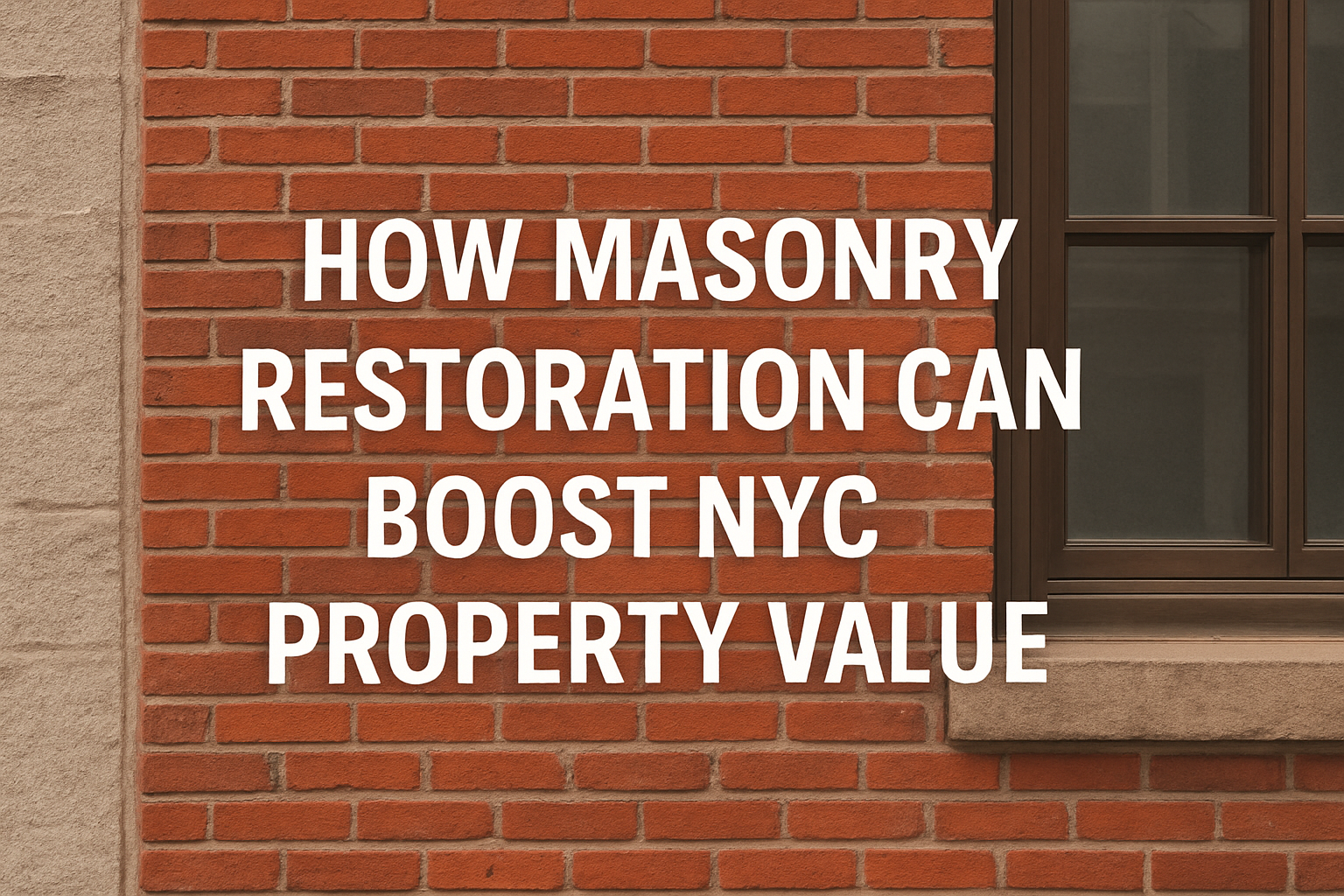
New York City’s architecture tells a story, from historic brownstones and pre-war buildings to contemporary high-rises, masonry structures are a defining feature of the city’s landscape. Over time, however, exposure to pollution, weather, and age can take a toll on brick, stone, and concrete surfaces. That’s where masonry restoration comes in.
Restoring and maintaining your building’s masonry not only preserves its structural integrity but also significantly enhances its aesthetic appeal and overall market value. Whether you own a historic townhouse in Brooklyn or a commercial property in Manhattan, masonry restoration can be one of the most rewarding investments you make.
How Masonry Restoration Increases Value of Properties
Masonry restoration involves repairing, cleaning, and preserving the exterior surfaces of a building made from materials like brick, stone, and mortar. The process can include repointing (replacing deteriorated mortar), cleaning stains and pollutants, repairing cracks, and sealing surfaces to prevent moisture infiltration.
In NYC, where architectural preservation is often tied to property regulations, masonry restoration does more than improve appearance, it ensures your building remains compliant, safe, and energy-efficient.
1. Enhances Curb Appeal and Market Perception
First impressions matter, especially in New York’s competitive real estate market. Clean, well-maintained masonry immediately signals care, quality, and longevity to potential buyers or tenants.
A restored façade can make an older building look fresh and inviting, while original architectural details, such as ornate cornices, stone trims, or decorative brickwork, can regain their former charm through careful restoration.
This improved visual appeal not only attracts more interest but can also lead to higher rental rates and faster sales.
2. Increases Structural Integrity and Longevity
New York’s climate is particularly harsh on masonry. Freeze-thaw cycles, heavy rainfall, and pollution can gradually weaken mortar joints and cause cracks or spalling. Left unaddressed, these small issues can escalate into major structural problems.
Restoration ensures that any damaged areas are repaired before they compromise the building’s stability. Repointing and sealing prevent water infiltration, a common cause of internal wall damage and mold. By strengthening your structure now, you protect it from future deterioration, saving substantial repair costs down the line.
3. Improves Energy Efficiency
Older masonry buildings often lose heat through cracks and deteriorated joints. Restoration not only closes these gaps but also allows for the addition of modern insulation and sealants. This helps reduce drafts and lowers energy consumption, improving indoor comfort.
In NYC, where energy efficiency contributes to sustainability goals and compliance with Local Law 97, restoring your masonry can make your property greener and more cost-effective to maintain.
4. Preserves Historic and Cultural Value
Many NYC buildings are part of designated historic districts, meaning restoration must follow specific preservation standards. Professional masonry restoration allows property owners to maintain authenticity while improving performance and safety.
By using historically appropriate materials and methods, such as lime-based mortars instead of modern cement, restoration experts help preserve your building’s heritage value, which can substantially increase its market worth among buyers seeking character-rich properties.
5. Boosts Property Appraisal and Buyer Confidence
A well-maintained exterior communicates that the entire property has been cared for. Appraisers and potential buyers often evaluate a building’s façade as a key indicator of overall condition.
Freshly restored masonry, free of cracks or stains, enhances both the visual and structural perception of quality. For commercial properties, it can also improve tenant retention and justify higher lease rates.
Buyers are more willing to invest in properties that require minimal immediate repair, making restoration a smart move for anyone planning to sell or refinance.
6. Ensures Compliance with NYC Building Regulations
In New York City, property owners are responsible for maintaining safe building exteriors. Under Local Law 11 (Facade Inspection Safety Program), buildings taller than six stories must undergo regular façade inspections. If issues like loose bricks or crumbling mortar are found, restoration becomes mandatory.
By staying proactive with masonry restoration, you can avoid costly violations, penalties, and emergency repairs. Compliance not only protects your investment but also reassures buyers and tenants that the building meets safety standards.
7. Provides Long-Term Financial Returns
While masonry restoration requires an upfront investment, it yields significant long-term benefits. A restored façade reduces ongoing maintenance costs, improves energy efficiency, and extends the lifespan of the structure.
These improvements translate directly into higher property values, better marketability, and stronger return on investment, especially in NYC, where well-preserved buildings command premium prices.
Conclusion: A Smart Investment in NYC Real Estate
In a city where architecture defines identity, masonry restoration is more than just maintenance, it’s a financial strategy. A well-restored building not only looks stunning but also performs better, lasts longer, and attracts higher-value tenants and buyers.
Whether you’re preserving a historic façade or modernizing a mixed-use property, investing in professional masonry restoration ensures your building remains a valuable and admired part of New York’s urban landscape for decades to come.