Stucco water damage causes serious concern for homeowners, especially in dense urban environments where exterior failures can escalate quickly. Many property owners assume that once water gets behind stucco, full replacement becomes the only option. That assumption often leads to delayed action, unnecessary expenses, and larger structural risks.
In reality, not all stucco water damage requires complete removal and rebuilding. In many cases, targeted repairs, moisture control, and system corrections can restore performance without replacing the entire facade. The key lies in understanding the severity of the damage, how moisture behaves behind stucco, and what repair methods actually address the root problem.
This article breaks down when stucco water damage can be fixed, when replacement becomes unavoidable, and how homeowners can make informed decisions that protect both their property and budget.
Know How Water Gets Behind Stucco
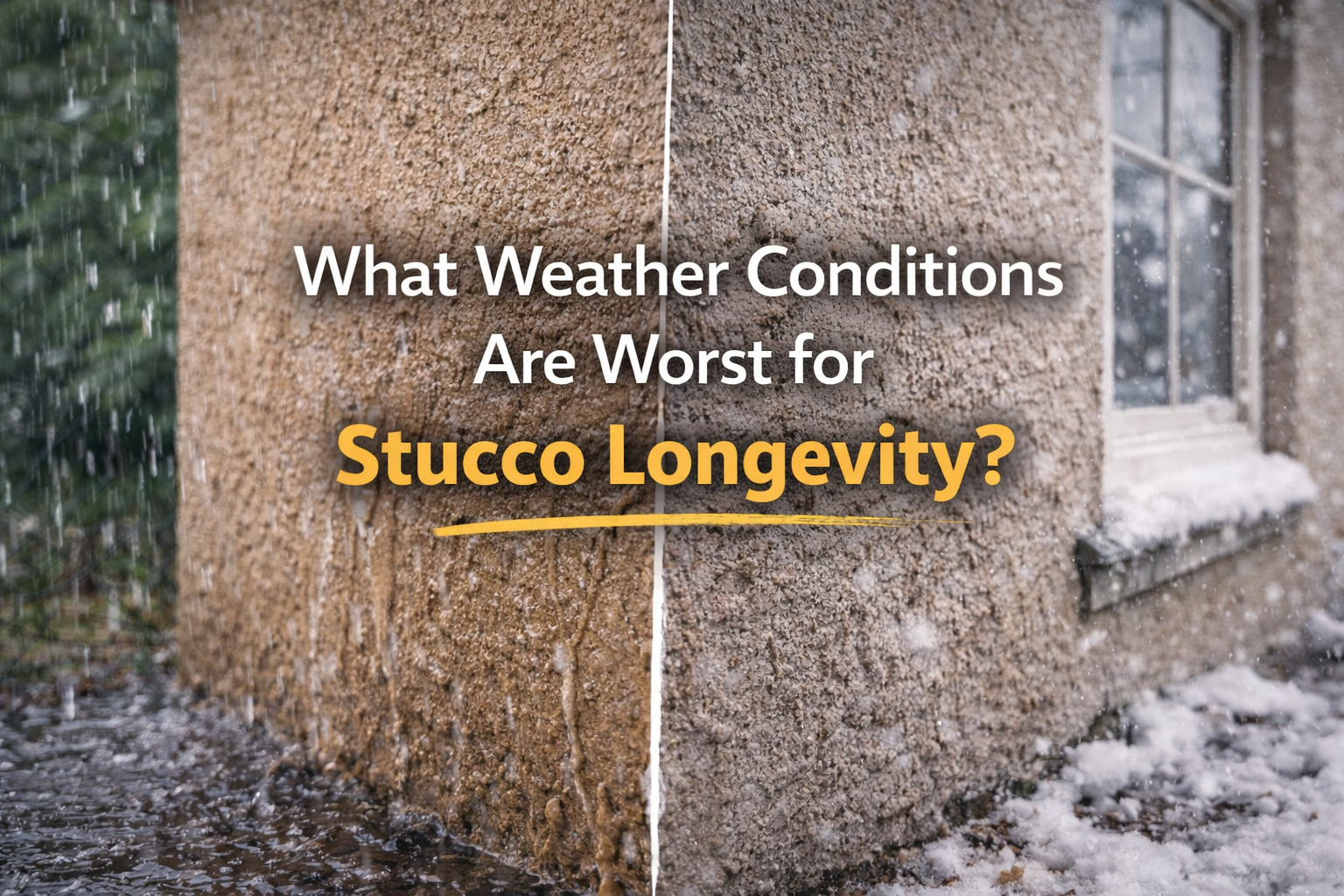
Stucco is not a waterproof barrier. It is a cladding system designed to shed water while allowing vapor to escape. Problems begin when water enters faster than the system can release it.
Common entry points include cracked surfaces, failed sealant joints, poorly installed flashing, and roof or window transitions. Once moisture gets behind the stucco, it can remain trapped for long periods, especially in humid or shaded conditions.
Urban buildings face added risks due to limited airflow, close property lines, and aging construction details. Over time, repeated moisture exposure compromises the materials beneath the stucco, not just the finish layer.
The Difference Between Surface Damage and System Failure
Not all stucco damage signals a failing system. Some issues affect only the outer layer, while others indicate deeper structural problems.
Surface damage often includes hairline cracks, localized staining, minor efflorescence, or cosmetic discoloration. These issues typically result from normal movement, thermal expansion, or environmental exposure. When addressed early, they rarely require full replacement.
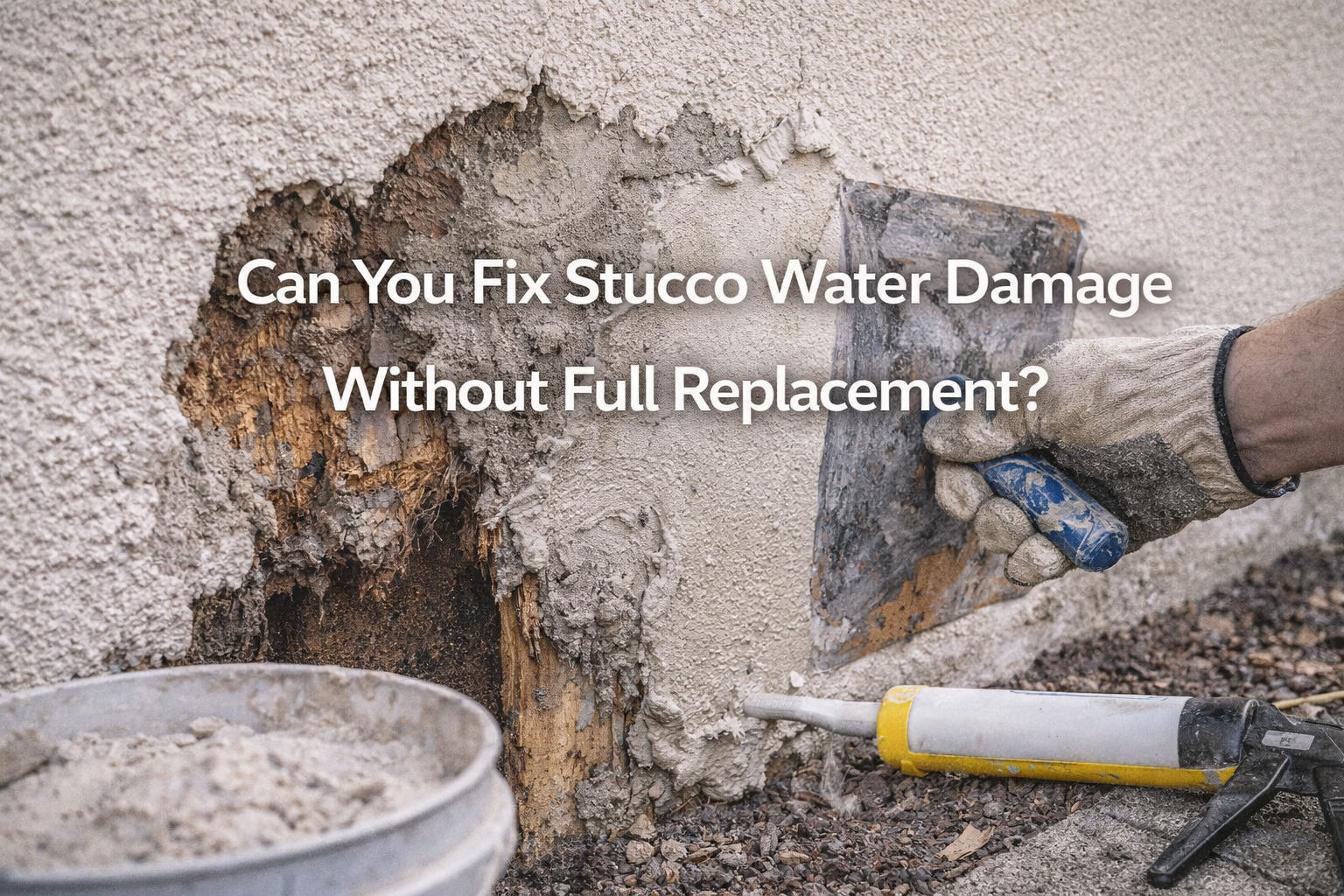
System failure occurs when moisture damages the substrate, lath, or framing behind the stucco. Signs include persistent bubbling, widespread cracking, mold growth, soft spots, and interior wall damage. In these cases, repairs must go beyond patching the surface.
Distinguishing between these two conditions determines whether repairs are effective or merely temporary.
How Moisture Testing Changes the Outcome
Visual inspection alone cannot confirm the extent of stucco water damage. Moisture testing provides clarity.
Professional moisture meters, probes, and infrared scanning identify trapped water behind stucco without removing large sections. These tools reveal whether moisture is localized or widespread.
When testing shows isolated moisture pockets, targeted repairs often succeed. When elevated moisture appears across multiple areas, replacement becomes more likely.
Accurate diagnosis prevents unnecessary demolition and ensures repairs address actual conditions rather than assumptions.
Repair Strategies That Avoid Full Replacement
In many situations, contractors can repair stucco water damage without tearing down the entire system. These approaches focus on removing damaged sections, restoring drainage, and sealing entry points.
Localized stucco removal allows contractors to access affected areas, replace compromised materials, and reinstall compatible stucco layers. This method works well when damage remains confined.
Crack repair combined with flexible sealants restores the stucco’s ability to move without reopening moisture pathways. Modern elastomeric coatings add further protection by bridging small cracks while allowing vapor to escape.
Flashing corrections play a critical role. Poorly installed or missing flashing causes recurring moisture issues. Fixing these details often stops water intrusion without replacing the stucco itself.
The Role of Drainage and Ventilation Improvements
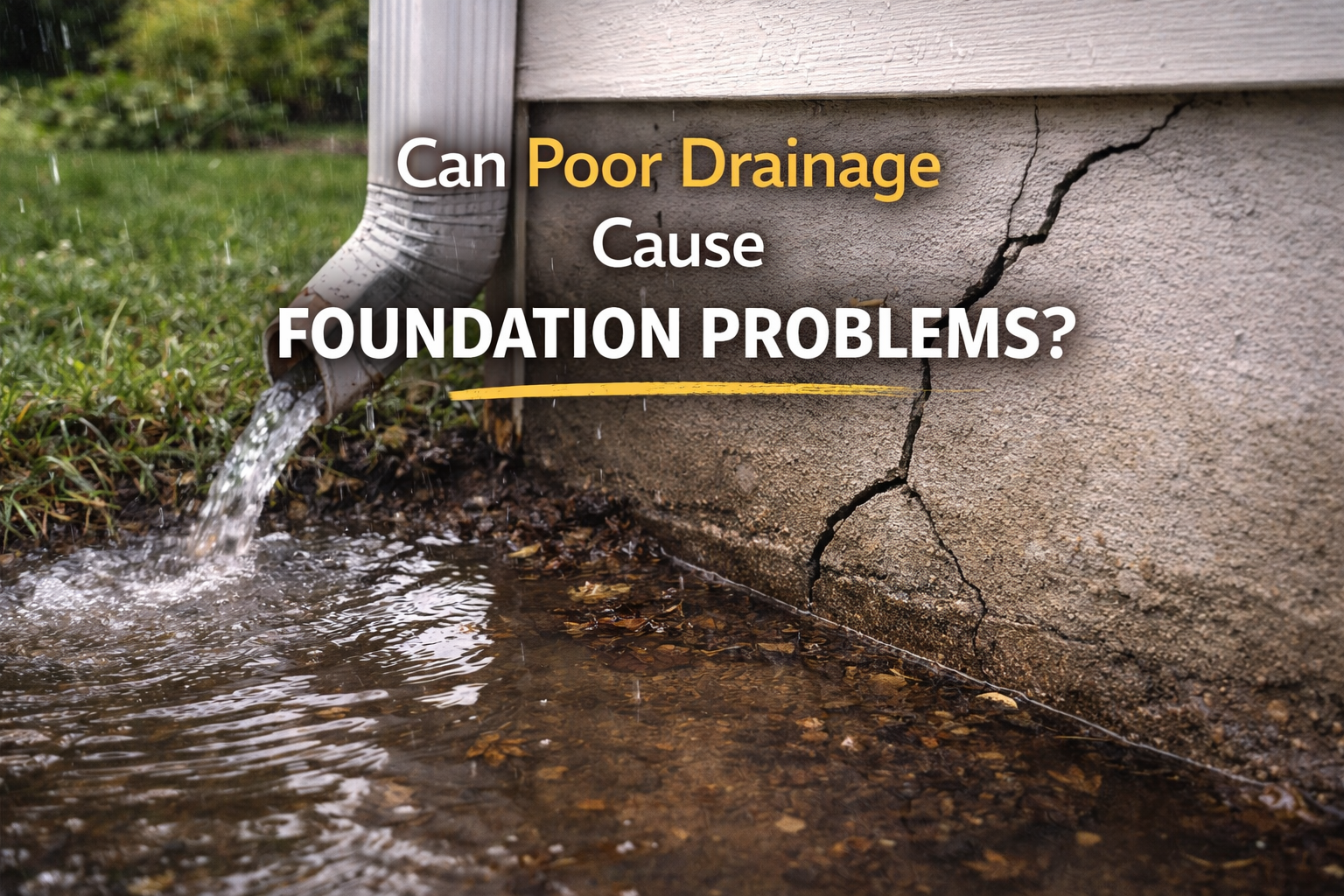
Many stucco failures occur because moisture lacks an exit path. Improving drainage changes how the system performs long term.
Weep screeds, drainage mats, and proper flashing allow water to drain rather than accumulate. Adding these components during repairs significantly reduces future risk.
Ventilation also matters. Buildings with limited airflow trap moisture longer, increasing damage potential. Strategic design adjustments help stucco dry more efficiently.
Repairing the surface without improving drainage often leads to repeated failure.
When Partial Replacement Becomes the Smart Choice
Some situations fall between minor repair and full replacement. Partial replacement offers a balanced solution.
When damage concentrates on lower sections, window perimeters, or roof transitions, replacing only those areas often restores system integrity. This approach limits cost while addressing the most vulnerable zones.
Partial replacement also allows for system upgrades in high-risk areas without disturbing intact sections elsewhere.
This option works best when moisture testing confirms the rest of the facade remains sound.
Scenarios That Require Full Stucco Replacement
While many cases avoid full replacement, some conditions leave no alternative.
Widespread moisture saturation behind stucco indicates prolonged exposure and hidden deterioration. Mold growth, rotted sheathing, and compromised framing demand complete removal to restore safety.
Improper original installation also necessitates replacement. Systems lacking drainage planes or installed over incompatible substrates often fail repeatedly despite repairs.
In these cases, replacement becomes an investment in long-term performance rather than a cosmetic upgrade.
Cost Considerations and Long-Term Value
Repairing stucco water damage without full replacement often costs significantly less upfront. However, value depends on durability.
Well-executed repairs that address moisture entry and drainage extend the life of the system and delay major expenses. Poorly planned fixes create recurring costs that exceed replacement over time.
Homeowners benefit most when repairs solve the cause, not just the symptoms.
Timing Plays a Critical Role in Repair Success
Early intervention changes everything. Small moisture issues expand quickly when ignored.
Delaying repairs allows water to spread laterally and downward, increasing the affected area. What starts as a localized repair can evolve into a full replacement scenario.
Regular inspections and prompt action preserve options and reduce long-term disruption.
Urban Climate Factors That Influence Repair Outcomes
City environments introduce challenges that affect repair decisions. High humidity, pollution, limited sunlight, and temperature fluctuations slow drying and accelerate material breakdown.
Repairs must account for these conditions through material selection and application methods. Systems designed for suburban or dry climates often underperform in urban settings.
Successful repairs align with local environmental realities.
Making an Informed Decision Without Guesswork
Fixing stucco water damage without full replacement is possible in many cases, but it requires accurate assessment, skilled execution, and realistic expectations.
Homeowners who rely on surface fixes alone risk repeating the problem. Those who investigate moisture behavior and system design make better long-term choices.
If you suspect stucco water damage, do not assume replacement is your only option. Early evaluation can reveal repair solutions that save time, money, and disruption. Schedule a professional inspection to identify moisture sources, assess system integrity, and determine the most effective path forward. Addressing stucco issues now protects your exterior, your interior, and the long-term value of your property.