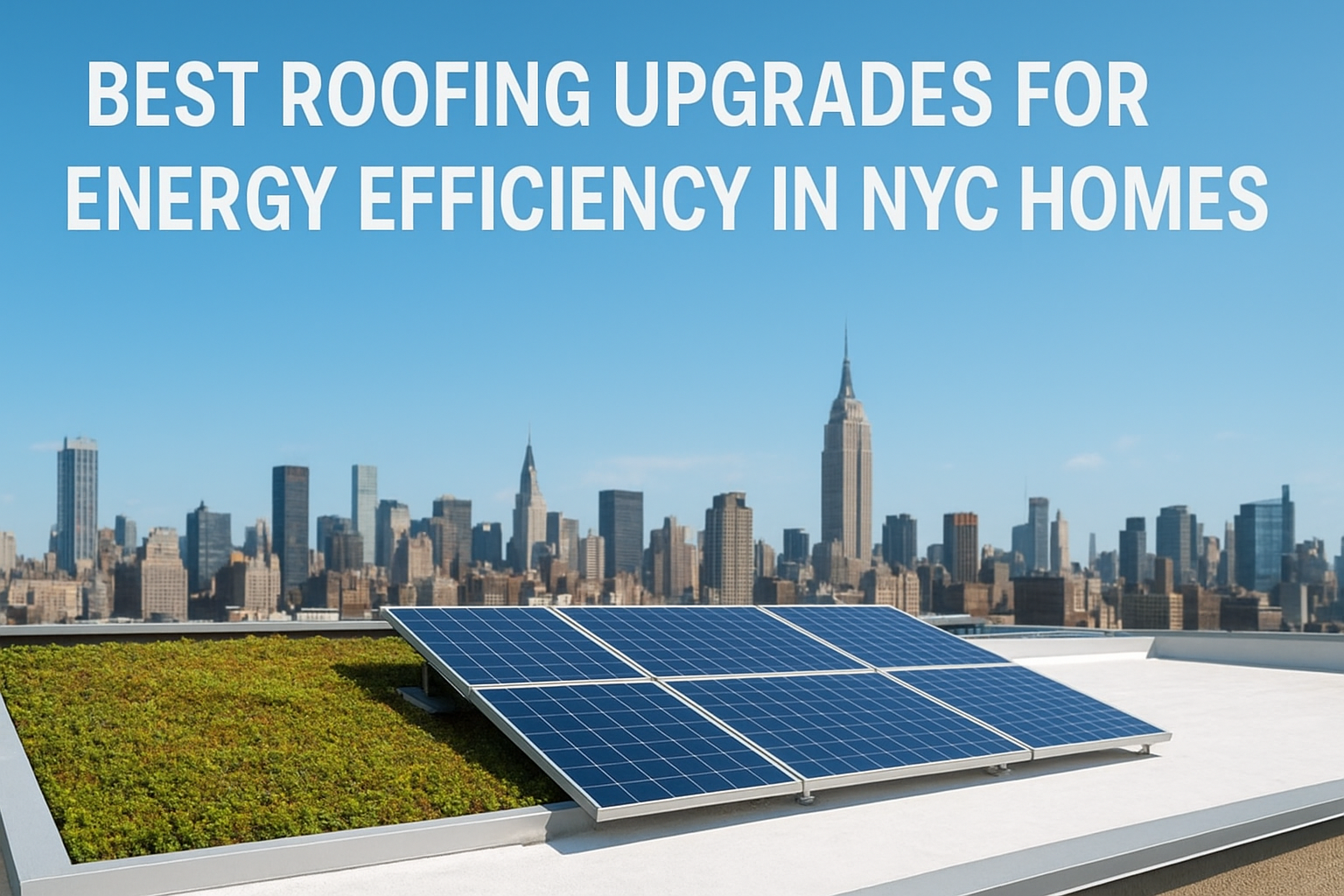
Energy efficiency has become a top priority for homeowners in New York City, where fluctuating weather patterns, rising utility costs, and strict sustainability standards shape how buildings are constructed and maintained. One of the most effective, and often overlooked, ways to improve your home’s energy performance is through a roofing upgrade.
Your roof does more than provide shelter; it regulates temperature, improves insulation, and protects your home from NYC’s intense heat, humidity, and cold winters. By investing in energy-efficient roofing solutions, you can significantly reduce energy use, enhance comfort, and lower utility bills, all while contributing to a greener city.
Best Roofing Upgrades for Energy Efficiency in NYC Homes
In a city of high-rises and historic brownstones, roofs endure constant exposure to sunlight, pollution, and seasonal temperature swings. Traditional roofing materials tend to absorb and trap heat, forcing air conditioners to work overtime in summer. Similarly, poor insulation allows warm indoor air to escape in winter, increasing heating costs.
Energy-efficient roofing upgrades combat these problems by reflecting sunlight, improving insulation, and promoting proper ventilation. Over time, these upgrades can reduce your energy bills by up to 20–30%, making them a smart investment for long-term savings.
1. Cool Roof Coatings
A cool roof reflects more sunlight and absorbs less heat than a standard roof. These coatings, typically made of reflective paint or membrane materials, help keep surface temperatures lower, especially during NYC’s hot and humid summers.
Benefits:
- Reduces cooling costs and improves indoor comfort.
- Extends roof lifespan by minimizing thermal stress.
- Qualifies for energy efficiency incentives under NYC’s sustainability programs.
Cool roof coatings are ideal for flat or low-slope roofs commonly found on NYC townhouses and apartment buildings.
2. Green Roof Systems
Also known as living roofs, green roofs feature vegetation and soil layers installed over a waterproof membrane. They’re increasingly popular in New York due to their environmental and financial benefits.
Benefits:
- Provides natural insulation, reducing heating and cooling needs.
- Absorbs rainwater and reduces stormwater runoff.
- Enhances air quality and reduces urban heat island effects.
- Adds visual appeal and potential recreational space.
Many NYC homeowners also benefit from tax incentives and rebates for installing green roofs, making this both a sustainable and economical choice.
3. Upgraded Roof Insulation
Insulation is one of the simplest yet most impactful upgrades for improving roof energy efficiency. By reinforcing insulation beneath your roof deck, you prevent heat transfer and maintain a consistent indoor temperature year-round.
Benefits:
- Reduces heating and cooling costs significantly.
- Prevents ice dam formation during winter.
- Enhances overall home comfort and soundproofing.
Rigid foam insulation or spray foam are common options that work well in NYC’s diverse building types.
4. Solar Roofing Systems
For homeowners looking to maximize sustainability, solar panels or solar shingles are game-changing upgrades. They harness sunlight to generate renewable energy directly from your roof, offsetting a significant portion of your electricity use.
Benefits:
- Lowers electricity bills and carbon footprint.
- Increases property value and eligibility for solar tax credits.
- Works well with modern flat or sloped roofs found in NYC homes.
With New York’s ambitious clean energy goals, solar roofs have become a forward-thinking investment for both financial and environmental returns.
5. High-Performance Roofing Materials
Modern roofing materials such as metal, composite, or reflective asphalt shingles offer excellent energy-saving potential. Metal roofs, in particular, reflect solar heat and can last up to 50 years or more with minimal maintenance.
Benefits:
- Superior durability and weather resistance.
- Reflects heat while maintaining a modern aesthetic.
- Recyclable and eco-friendly construction.
For historic or aesthetic-conscious NYC neighborhoods, manufacturers now offer energy-efficient shingles that mimic slate, clay, or wood while delivering modern performance.
6. Proper Roof Ventilation
Good ventilation is key to maintaining temperature balance and preventing moisture buildup in your attic or roof cavity. Without it, heat and humidity can cause insulation damage and higher energy consumption.
Benefits:
- Reduces strain on heating and cooling systems.
- Extends roof lifespan by preventing moisture-related damage.
- Maintains stable indoor air quality.
Adding or upgrading ridge vents, soffit vents, or attic fans ensures consistent airflow and complements other energy-efficient improvements.
Conclusion
Upgrading your roof is more than a cosmetic choice,it’s a long-term investment in comfort, sustainability, and property value. In New York City, where buildings face constant environmental stress, choosing energy-efficient roofing materials and systems can dramatically cut energy costs while enhancing your home’s performance.
Whether you opt for a reflective cool roof, a lush green roof, or a solar-powered system, each upgrade contributes to a cleaner, more efficient, and future-ready New York. With professional installation and regular maintenance, your energy-efficient roof can serve as both a protective barrier and a smart financial asset for decades.