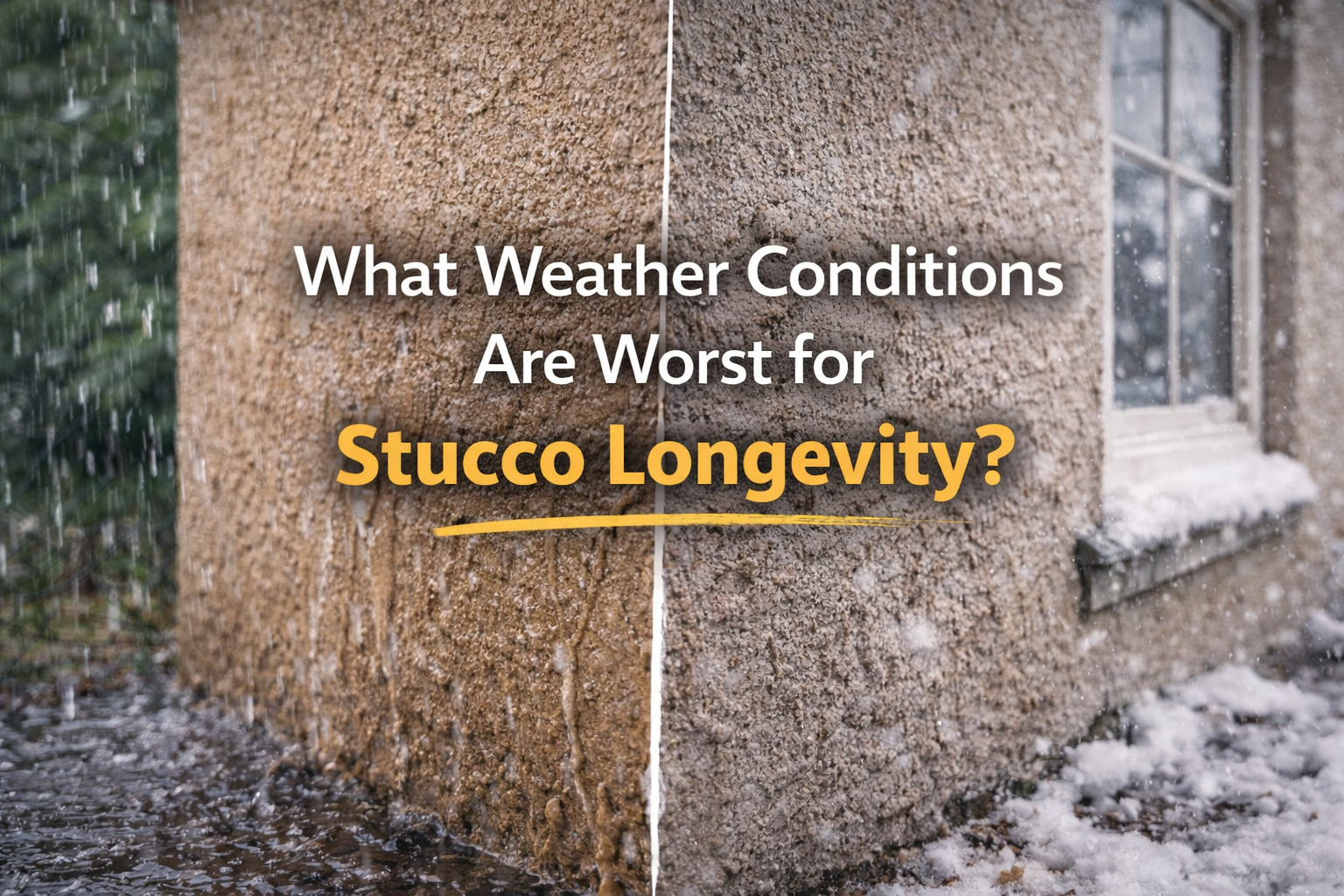
Stucco is a time-tested exterior finish that has stood strong across centuries and architectural styles. Whether you’ve admired the smooth facades of modern homes or the textured charm of Spanish villas, chances are you’ve seen stucco at work. But what exactly is it, and why is it such a popular choice for home exteriors?
Let’s take a closer look.
What Is Stucco?
Stucco is a cement-based plaster made by mixing cement, sand, lime, and water. It’s applied wet over walls and hardens into a dense, durable exterior layer. Traditionally used on masonry, it’s now also applied over wood framing with a metal lath base.
There are two main types:
- Traditional stucco (also called hard coat): layered system applied over lath.
- EIFS (Exterior Insulation and Finish System): a modern version with insulation and synthetic finish coats.
Both offer different benefits, but the core appeal remains the same. strong, long-lasting, and beautiful walls.
Why Is Stucco So Popular for Exteriors?
Stucco remains one of the most loved exterior finishes among homeowners, and here’s why.
1. Long-Lasting Durability
Stucco exteriors can last over 50 years when installed correctly. It’s resistant to fire, mold, rot, and insects, making it especially suitable for homes in dry or fire-prone regions. Even in harsher climates, with the right maintenance, it holds up well over time.
2. Low Maintenance Appeal
Stucco doesn’t peel or require frequent repainting. Occasional cleaning and small crack repairs are usually all it takes to keep it looking fresh. Its solid surface also hides minor imperfections that might show on other finishes.
3. Energy Efficiency and Insulation
Stucco acts as a natural insulator, helping to regulate indoor temperatures. It keeps interiors cooler in summer and warmer in winter, reducing the load on your HVAC system and trimming down energy bills.
4. Customizable Finish and Color
From rough textures to sleek, modern finishes, stucco can be tailored to suit any aesthetic. It also takes pigment well, meaning homeowners can choose from earthy neutrals, bright whites, or bold tones to match their vision.
5. Fire and Sound Resistance
Stucco’s dense structure makes it naturally fire-resistant, a major plus in urban or wildfire-risk areas. It also dampens outside noise, making it ideal for city homes or high-traffic zones.
6. Cost-Effective Over Time
While initial installation may cost more than vinyl siding, stucco pays off in longevity, low upkeep, and energy savings. It rarely needs full replacement and maintains its look for decades.
Conclusion: Is Stucco Right for Your Exterior?
If you’re looking for a stylish, durable, and low-maintenance exterior material, stucco is a top contender. It brings together old-world charm and modern practicality in one seamless finish. Especially for homeowners in warmer, drier climates, stucco offers unmatched value and performance.
Just be sure to hire experienced professionals, proper application is key to reaping its full benefits.
FAQs
Yes, but it requires proper moisture barriers and drainage systems to prevent water infiltration. EIFS systems are often used in such regions for better protection.
Stucco holds color well but may need repainting every 7–10 years, depending on sun exposure and weathering.
Initial costs can be similar to brick and more than vinyl, but stucco is cost-effective long-term due to its durability and minimal maintenance needs.
Minor cracks can result from natural settling or temperature changes. These are usually cosmetic and easy to repair. Larger cracks may indicate moisture issues and should be checked by a pro.
DIY stucco is not recommended. It requires multiple layers, curing times, and skill. Poor installation can lead to structural problems and water damage.