
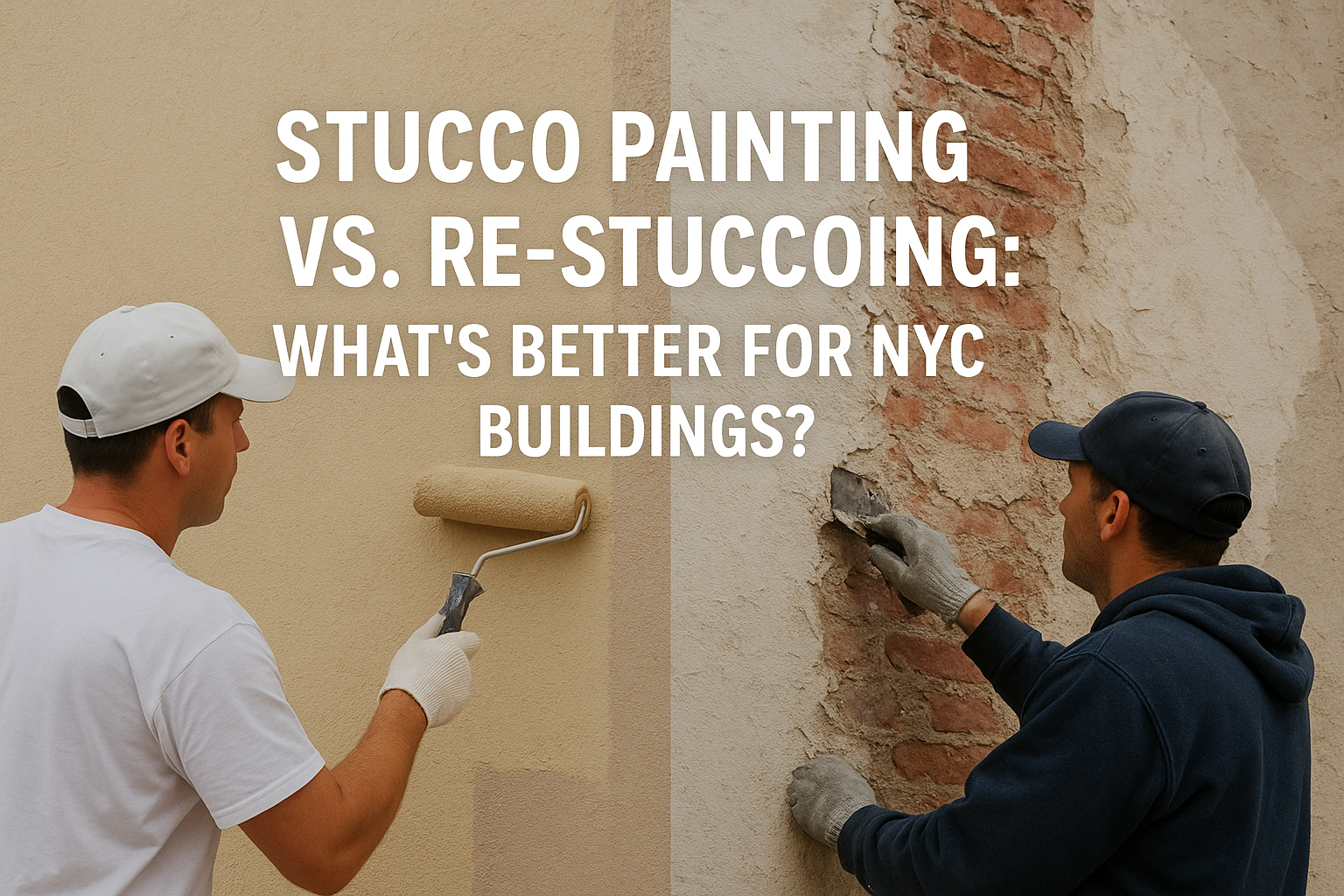
Stucco has long been a signature feature of New York City architecture, adorning brownstones, townhouses, and apartment exteriors with its elegant, textured finish. However, over time, exposure to NYC’s harsh weather, from humid summers to icy winters, can cause stucco to fade, crack, or lose its protective coating. When that happens, property owners face a common question: Should you paint your stucco or re-stucco the surface entirely?
Both methods can restore curb appeal and protection, but they differ in cost, longevity, and effectiveness. Understanding the pros and cons of each helps homeowners and property managers make the best decision for their building’s needs.
Understanding the Role of Stucco in NYC Architecture
Stucco isn’t just decorative, it’s a weather-resistant material that protects buildings from moisture and temperature extremes. It’s prized for its durability, versatility, and ability to complement both traditional and modern façades.
In New York City, where pollution, salt exposure, and freeze-thaw cycles are common, stucco requires periodic maintenance. When cracks or fading appear, you can either paint over the existing stucco or apply a new stucco layer, but the right choice depends on the condition of the surface and long-term goals.
1. What Is Stucco Painting?
Stucco painting involves applying a specialized masonry paint or elastomeric coating over an existing stucco surface. This process refreshes the appearance while adding a protective layer that helps resist moisture and UV damage.
It’s a popular choice for homeowners seeking a quick, affordable facelift. Stucco paint comes in various finishes and colors, allowing easy customization without major structural work. However, the success of painting depends on surface preparation. The stucco must be clean, dry, and free of cracks or loose material.
Benefits of Stucco Painting:
- Lower cost compared to re-stuccoing
- Fast and minimally disruptive process
- Seals minor hairline cracks and improves moisture resistance
- Wide range of color and finish options
Limitations:
- Paint can trap moisture if applied incorrectly
- Needs reapplication every 5–10 years
- Doesn’t address deep structural cracks or compromised stucco layers
2. What Is Re-Stuccoing?
Re-stuccoing, or resurfacing, involves applying a new layer of stucco over the old one after removing damaged or deteriorated sections. This method is more comprehensive than painting and restores both the aesthetic and structural integrity of the exterior.
Professionals typically clean the surface, repair problem areas, and apply a fresh coat of stucco that bonds to the existing layer. The result is a brand-new finish that can last decades when properly maintained.
Benefits of Re-Stuccoing:
- Restores structural strength and surface stability
- Provides a new, long-lasting texture and finish
- Increases energy efficiency and insulation
- Offers a more permanent solution for severely damaged exteriors
Limitations:
- Higher cost and longer project time
- Requires skilled professionals for correct application
- Not ideal if only minor cosmetic improvement is needed
3. Cost Comparison: Painting vs. Re-Stuccoing
For NYC buildings, cost plays a major role in decision-making. Stucco painting generally costs between $2 to $5 per square foot, while re-stuccoing can range from $6 to $12 per square foot depending on surface condition and design complexity.
Painting is more budget-friendly for buildings with mostly intact stucco that need a refreshed look. Re-stuccoing, while pricier upfront, offers better long-term value when the existing surface is cracked, water-damaged, or nearing the end of its lifespan.
4. Durability and Lifespan
Painted stucco typically lasts 5 to 10 years before requiring maintenance, depending on the quality of paint and environmental exposure. Re-stuccoing, by contrast, can last 20 to 25 years or more, making it a worthwhile investment for older buildings or those exposed to harsh elements.
In NYC’s humid, freeze-thaw climate, elastomeric stucco paint can provide flexible protection, while re-stuccoing ensures the underlying structure remains solid for decades.
5. Appearance and Finish Options
Both methods offer aesthetic versatility, but in different ways. Painting allows for easy color changes and can modernize your façade quickly. Re-stuccoing, however, provides complete control over texture, depth, and detailing.
Homeowners who want to retain their building’s original charm often prefer re-stuccoing, as it allows for authentic replication of historical textures and finishes. Meanwhile, those seeking a contemporary refresh may find painting more practical.
6. Moisture and Maintenance Considerations
NYC’s mix of rain, snow, and humidity makes moisture control critical. Improperly sealed paint layers can trap moisture, leading to bubbling or peeling. Re-stuccoing, on the other hand, creates a breathable, water-resistant layer that naturally expels trapped vapor.
Regular maintenance, such as annual inspections and gentle cleaning, extends the lifespan of either finish. Always address cracks and water stains early to prevent deeper damage.
7. Which Option Is Best for Your NYC Building?
The decision depends on your building’s age, condition, and long-term maintenance goals.
- Choose painting if your stucco is in good condition with only surface fading or hairline cracks.
- Choose re-stuccoing if the stucco shows structural issues, deep cracks, or crumbling.
For most NYC properties, a professional inspection can reveal whether a fresh coat of paint or a full resurfacing is the more cost-effective and durable choice.
Conclusion
Stucco painting and re-stuccoing both offer valuable benefits for NYC buildings, but they serve different purposes. Painting delivers a fast, affordable makeover, while re-stuccoing provides a deeper, longer-lasting solution that enhances both durability and insulation.
Whichever option you choose, the key is proper preparation and expert application. Working with experienced masonry or stucco specialists ensures your building’s façade remains not only beautiful but also protected from the demanding urban climate. With the right care, your stucco exterior can continue to define your property’s character and withstand the test of time in the city that never sleeps.