Masonry repair sits in a gray zone for many homeowners. Some cracks look harmless, loose bricks appear easy to reset, and online tutorials often make repairs seem simple. At the same time, masonry failures can signal deeper structural issues that worsen quickly when handled incorrectly.
Knowing when to tackle masonry repair yourself and when to call a professional is critical. The wrong choice can lead to water intrusion, structural instability, higher repair costs, and permanent damage to your home. This is especially true in cities like New York, where buildings face constant weather stress, moisture exposure, and aging materials.
This article breaks down how to evaluate masonry problems realistically, what repairs homeowners can safely handle, and when professional intervention becomes essential.
Understanding the Role Masonry Plays in Your Home
Masonry does more than define a building’s appearance. Brick, stone, block, and mortar systems work together to distribute weight, resist weather, and protect interior spaces.
When masonry fails, the damage rarely stays isolated. Cracks allow moisture to enter. Loose units weaken surrounding areas. Mortar deterioration reduces the wall’s ability to move safely with temperature changes.
Before deciding on DIY or professional repair, homeowners must understand that masonry functions as a system. Fixing one visible issue without addressing the underlying cause often leads to recurring damage.
Common Masonry Issues Homeowners Encounter
Most masonry problems fall into recognizable categories. Each category carries a different level of risk.
Hairline mortar cracks often appear due to normal settling or seasonal expansion. Efflorescence, the white powdery residue on brick or stone, signals moisture movement but not immediate failure. Minor surface chips can occur from impact or weather exposure.
Other issues raise more serious concerns. Horizontal cracks, bulging walls, loose bricks, crumbling mortar, and water penetration indicate structural stress or long-term moisture damage. These problems demand closer evaluation before any repair attempt.
Identifying the type of issue helps determine the correct response.
Masonry Repairs That Are Usually Safe for DIY
Some masonry tasks fall within the skill range of careful homeowners, provided the damage is limited and cosmetic.
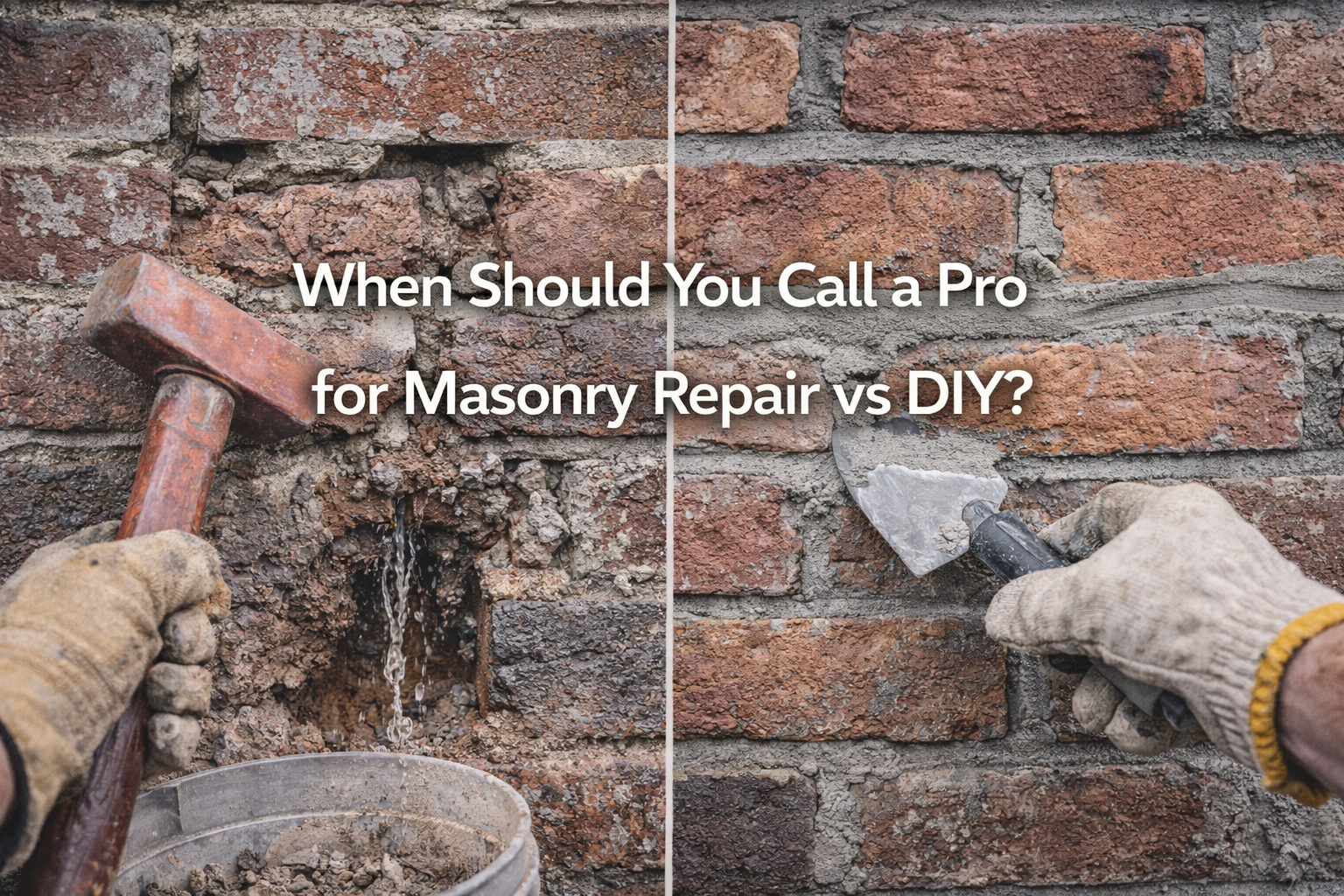
Repointing small sections of non-load-bearing mortar can be manageable with the right tools and materials. Cleaning efflorescence using appropriate methods helps restore appearance without altering structure. Resetting a single loose brick in a garden wall or decorative feature may also be reasonable.
DIY repairs work best when the affected area is small, accessible, and not supporting structural loads. The key is restraint. Homeowners should stop immediately if damage extends beyond the surface.
Even simple repairs require correct materials. Using incompatible mortar or sealants can cause long-term harm.
Situations Where DIY Creates More Damage Than It Fixes
Many masonry failures worsen because of well-intentioned DIY attempts. Using modern cement-based mortar on historic brick traps moisture and accelerates brick deterioration. Sealing cracks without addressing water sources hides damage while allowing moisture to spread internally.
Patching visible cracks without correcting movement or settlement issues results in repeated failure. Pressure washing masonry incorrectly erodes mortar and weakens brick faces.
Once DIY work interferes with the masonry system, professional repairs become more complex and costly. In many cases, improper fixes cause more damage than the original problem.
Structural Cracks Require Professional Evaluation
Crack orientation tells an important story. Vertical hairline cracks may result from normal settling. Horizontal or stair-step cracks often indicate structural movement or foundation stress.
When cracks widen over time, extend through multiple bricks, or appear on multiple walls, professional assessment is necessary. These patterns often signal shifting loads or compromised support systems.
Attempting to patch structural cracks cosmetically does nothing to resolve the underlying issue. A professional identifies the cause before recommending repairs.
Moisture Intrusion Changes the Risk Level
Water is masonry’s greatest enemy. Once moisture enters walls, it affects mortar, brick, insulation, and interior finishes.
Signs of moisture intrusion include staining, efflorescence, mold odors, interior wall damage, and mortar deterioration. These issues often originate from failed flashing, improper drainage, or hidden cracks.
DIY repairs rarely address moisture pathways effectively. Professionals use diagnostic methods to trace water movement and repair the system, not just the symptom.
Ignoring moisture problems allows damage to spread invisibly behind walls.
Height, Access, and Safety Considerations
Masonry repairs at ground level differ significantly from work at elevation. Chimneys, parapets, facades, and upper-story walls pose safety risks.
Working on ladders or scaffolding without proper training increases the chance of injury and improper repairs. Professional masons use specialized equipment and follow safety standards that homeowners cannot easily replicate.
When access becomes complicated, professional repair is the safer and more effective option.
Historic and Older Buildings Demand Specialized Knowledge
Many New York buildings use older masonry systems designed to breathe and move differently from modern construction.
Historic brick and stone require compatible materials and techniques. Modern mortars, sealants, and coatings often cause irreversible damage when applied to older structures.
Professionals trained in historic masonry understand how to preserve material integrity while performing necessary repairs. DIY work on older buildings frequently leads to accelerated deterioration.
Preservation requires expertise, not experimentation.
The Cost Difference Between Early and Delayed Professional Repair
Homeowners often choose DIY to save money. In reality, delaying professional repair frequently increases long-term costs.
Minor masonry issues grow under continued exposure to moisture and freeze-thaw cycles. What begins as localized mortar damage can evolve into widespread wall failure.
Early professional intervention addresses root causes and stabilizes the structure. Delayed repair often requires more extensive restoration.
Cost should be evaluated over time, not just at the moment of repair.
Professional Masonry Repair Goes Beyond Visual Fixes
Professional masons do more than patch cracks or replace bricks. They assess structural movement, material compatibility, drainage systems, and environmental exposure.
This holistic approach ensures repairs last. It also prevents recurring damage that frustrates homeowners who rely on surface-level fixes.
Professional work restores function, not just appearance.
Balancing DIY Effort With Professional Expertise
DIY masonry repair has a place when the issue is small, superficial, and well understood. It becomes risky when homeowners underestimate the complexity of masonry systems.
Knowing your limits protects your home. Recognizing when expertise is required prevents long-term damage and unnecessary expense.
A smart approach balances hands-on care with professional guidance.
Conclusion
Deciding between DIY masonry repair and professional service depends on scale, location, cause, and risk. Cosmetic issues with no structural or moisture implications may allow limited homeowner intervention. Structural cracks, moisture intrusion, historic materials, and elevated repairs demand professional expertise.
Masonry problems rarely improve on their own. The right response at the right time protects both the building and the investment.
Understanding when to step back and call a professional is not a weakness. It is responsible for homeownership.
If you notice cracking, crumbling mortar, loose bricks, or signs of water damage, do not wait for the problem to escalate. A professional masonry assessment can identify hidden risks and prevent costly repairs down the line.
Contact a trusted masonry specialist today to evaluate your exterior, recommend the right solution, and protect your property for the long term.