Weed growth between pavers is one of the most common and frustrating problems homeowners face in outdoor spaces. Patios, driveways, walkways, and garden paths can look pristine after installation, only to develop invasive weeds within a few seasons. Many people assume weeds indicate poor workmanship or low-quality materials. In reality, weeds thrive due to a combination of installation choices, environmental conditions, and maintenance habits.
In dense urban environments like New York City, weed growth becomes even more aggressive. Moisture retention, airborne seeds, temperature fluctuations, and compacted soil all create ideal conditions for weeds to take hold. Avoiding weed growth requires more than pulling plants after they appear. It requires a preventive strategy that starts beneath the surface and continues through long-term care.
This article explains how weeds form between pavers, what mistakes accelerate growth, and how to create a durable, low-maintenance paver system that resists weeds year after year.
How Weeds Appear Between Pavers
Weeds do not usually grow because plants break through solid stone. They grow because organic material accumulates in the joints over time. Wind carries soil particles, pollen, dust, and seeds into gaps. Rainwater pushes these materials deeper. Once enough organic matter settles, seeds germinate.
Contrary to popular belief, most weeds growing between pavers do not originate from beneath the installation. They grow from the top down, not the bottom up. This distinction matters because surface-level prevention is just as important as base preparation.
When joints remain clean, compacted, and properly filled, weeds struggle to establish roots.
Base Preparation Determines Long-Term Weed Resistance
The foundation beneath pavers plays a major role in weed prevention. A poorly prepared base allows movement, moisture retention, and material migration, all of which create space for weeds to thrive.
A proper base includes compacted aggregate layers that drain efficiently. When water drains correctly, it reduces the moisture weeds need to survive. It also prevents fine particles from rising into the joints.
Skipping compaction steps or using improper materials leads to joint instability. Over time, gaps widen, inviting debris accumulation and weed growth.
Strong foundations do not eliminate weeds entirely, but they significantly slow the process.
Joint Material Choice Makes a Major Difference
Joint filler material directly affects weed resistance. Traditional sand joints are easy to install, but they allow organic matter to settle quickly. They also wash out during heavy rain or pressure washing.
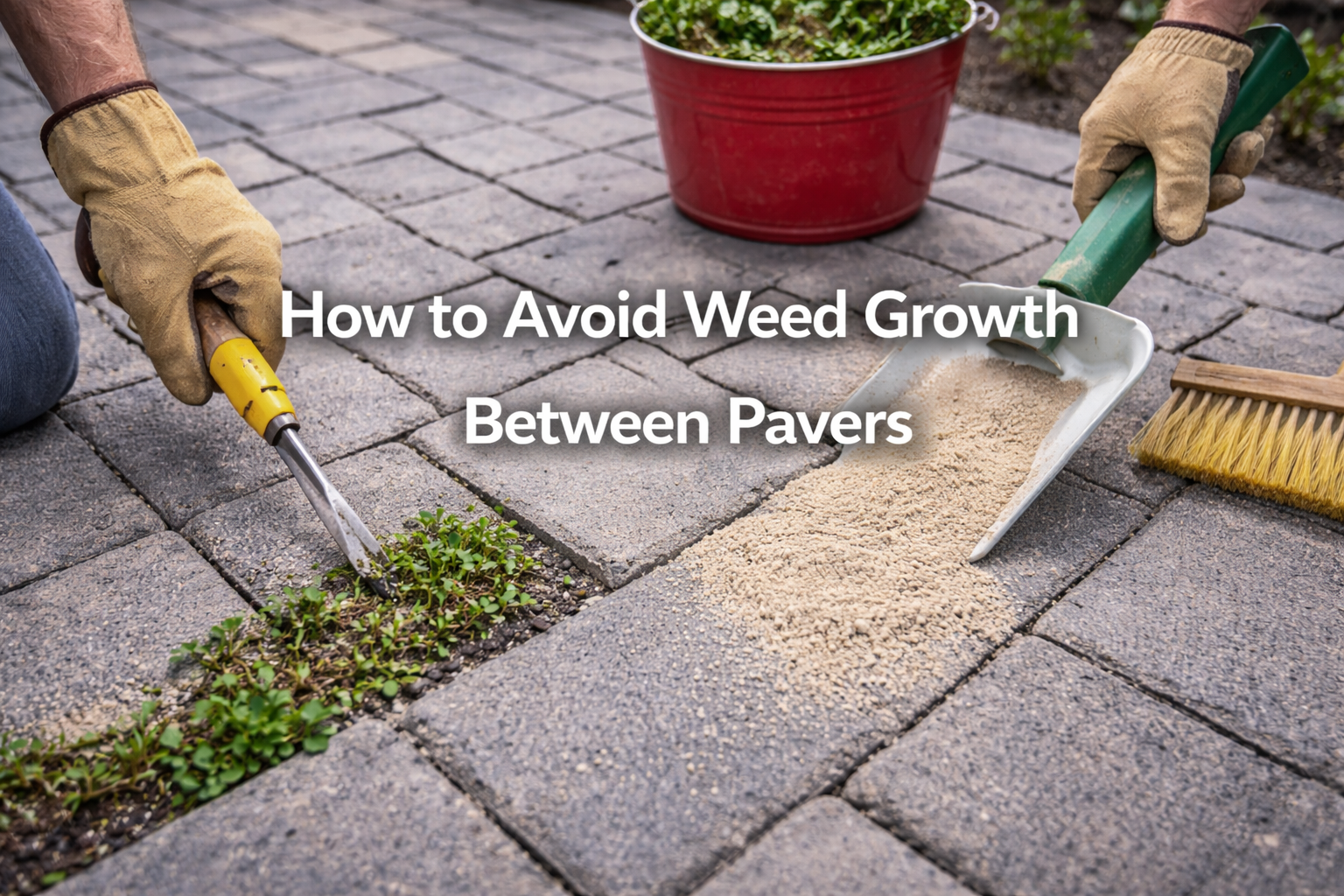
Polymeric sand offers a more effective alternative. It hardens when activated with water, forming a semi-solid barrier that resists weed penetration. When installed correctly, it reduces air pockets and limits seed settlement.
However, polymeric sand still requires proper installation. Incorrect moisture levels or poor compaction can cause cracking, which reopens pathways for weeds.
Joint material selection should align with climate conditions, usage levels, and maintenance expectations.
Proper Edge Restraints Prevent Joint Failure
Edge restraints keep pavers locked in place. Without them, pavers shift outward over time, widening joints and allowing debris to enter.
When joints expand, weed growth accelerates. Loose edges also allow water infiltration, increasing moisture retention beneath the surface.
Quality edge restraints made from concrete, metal, or heavy-duty plastic maintain structural integrity. They preserve joint spacing and protect the system from gradual breakdown.
Weed prevention depends on stability as much as surface treatment.
Drainage Controls Weed-Friendly Conditions
Standing water creates ideal conditions for weed germination. Poor drainage keeps joints damp and encourages organic buildup.
Sloped installations direct water away from paved surfaces. Permeable systems allow water to pass through rather than pool on top. Both approaches reduce moisture accumulation.
In urban settings, drainage becomes even more critical due to compacted soils and limited absorption areas. Without drainage planning, weed issues become persistent and difficult to manage.
Dry joints discourage plant growth naturally.
Regular Cleaning Stops Seeds Before They Take Root
Weed prevention does not end after installation. Routine cleaning removes seeds before they germinate.
Sweeping eliminates surface debris that settles into joints. Light rinsing clears dust and pollen without displacing joint material. Neglect allows organic matter to accumulate unnoticed.
Power washing should be used carefully. Aggressive pressure removes joint sand, creating space for weeds to return quickly. When pressure washing is necessary, joints should be refilled afterward.
Consistent cleaning disrupts the weed growth cycle before it begins.
Sealing Pavers Adds an Extra Layer of Protection
Sealing pavers helps prevent weed growth by stabilizing joint material and reducing moisture absorption. Sealers limit the movement of sand and block organic matter from embedding deeply.
Some sealers also enhance color and protect against staining, which improves the overall appearance of outdoor spaces.
Sealing is not permanent. It requires reapplication based on exposure levels and product type. However, sealed surfaces remain easier to clean and maintain over time.
When combined with proper joint material, sealing significantly reduces weed pressure.
Avoid Organic Mulch Near Paver Edges
Many homeowners unknowingly introduce weeds by placing mulch directly against paver edges. Organic mulch breaks down and spreads into joints, carrying seeds with it.
Over time, mulch migration fills gaps and creates nutrient-rich pockets perfect for weed growth.
Using stone edging, metal barriers, or non-organic ground covers near pavers limits contamination. Keeping mulch zones clearly separated protects paved surfaces.
Landscape design choices influence weed behavior more than most people realize.
Sunlight Exposure Influences Weed Patterns
Weeds thrive where sunlight, moisture, and nutrients align. Shaded areas may develop moss, while sunny joints encourage grass and broadleaf weeds.
Understanding exposure patterns helps target prevention strategies. Heavily shaded areas benefit from better drainage and airflow. Sunny areas require tighter joints and more frequent cleaning.
Uniform maintenance across different exposure zones reduces uneven weed growth.
Chemical Weed Killers Are Short-Term Solutions
Herbicides kill visible weeds, but they do not address the underlying causes. Many chemicals only treat surface growth and allow seeds to return quickly.
Repeated chemical use can damage joint material, discolor pavers, and affect nearby plants. It also raises environmental concerns, especially in residential areas.
Preventive construction and maintenance outperform chemical control over the long term.
Heat Treatments Offer Limited Control
Some homeowners use boiling water or flame tools to kill weeds. While effective on visible growth, these methods do not remove seeds or organic buildup.
Heat treatments also risk damaging polymeric sand or sealers if applied improperly.
They work best as supplemental solutions rather than primary strategies.
Consistent Maintenance Prevents Escalation
Weeds are easier to manage when addressed early. Small seedlings remove easily without disturbing joints. Mature weeds develop deep roots that displace material and widen gaps.
Seasonal inspections catch issues before they spread. Re-sanding joints, sealing surfaces, and cleaning debris maintain system integrity.
Preventive maintenance costs less than reactive repairs.
Urban Conditions Require Proactive Planning
City environments introduce additional challenges. Airborne pollutants settle faster. Limited drainage options increase moisture retention. Heavy foot traffic accelerates joint wear.
Urban paver systems must be designed with these pressures in mind. Durable materials, precise installation, and ongoing care reduce weed growth significantly.
Ignoring urban conditions leads to faster deterioration and higher maintenance demands.
Long-Term Weed Prevention Is a System, Not a Product
There is no single product that permanently prevents weeds between pavers. Successful prevention relies on a combination of base preparation, joint material selection, drainage design, and maintenance routines.
Each element supports the others. Weakness in one area undermines the entire system.
Homeowners who approach weed prevention holistically achieve cleaner, longer-lasting outdoor spaces.
Conclusion
Weed growth between pavers does not happen randomly. It results from moisture retention, organic buildup, joint instability, and maintenance gaps. Addressing these factors proactively reduces weed pressure dramatically.
Strong foundations, proper joint materials, effective drainage, and regular cleaning work together to keep pavers looking clean and intact. When homeowners prioritize prevention over reaction, outdoor spaces remain functional and visually appealing for years.
Avoiding weeds is not about constant removal. It is about creating conditions where weeds struggle to survive.
Ready to Protect Your Paver Investment?
If weeds are already taking over your paver surfaces or you want to prevent future growth, professional installation and maintenance make a measurable difference. Expert evaluation ensures proper base preparation, joint stabilization, and drainage tailored to your environment.
Contact a trusted outdoor renovation specialist today to protect your pavers, reduce maintenance, and keep your outdoor space looking clean, durable, and weed-free year-round.