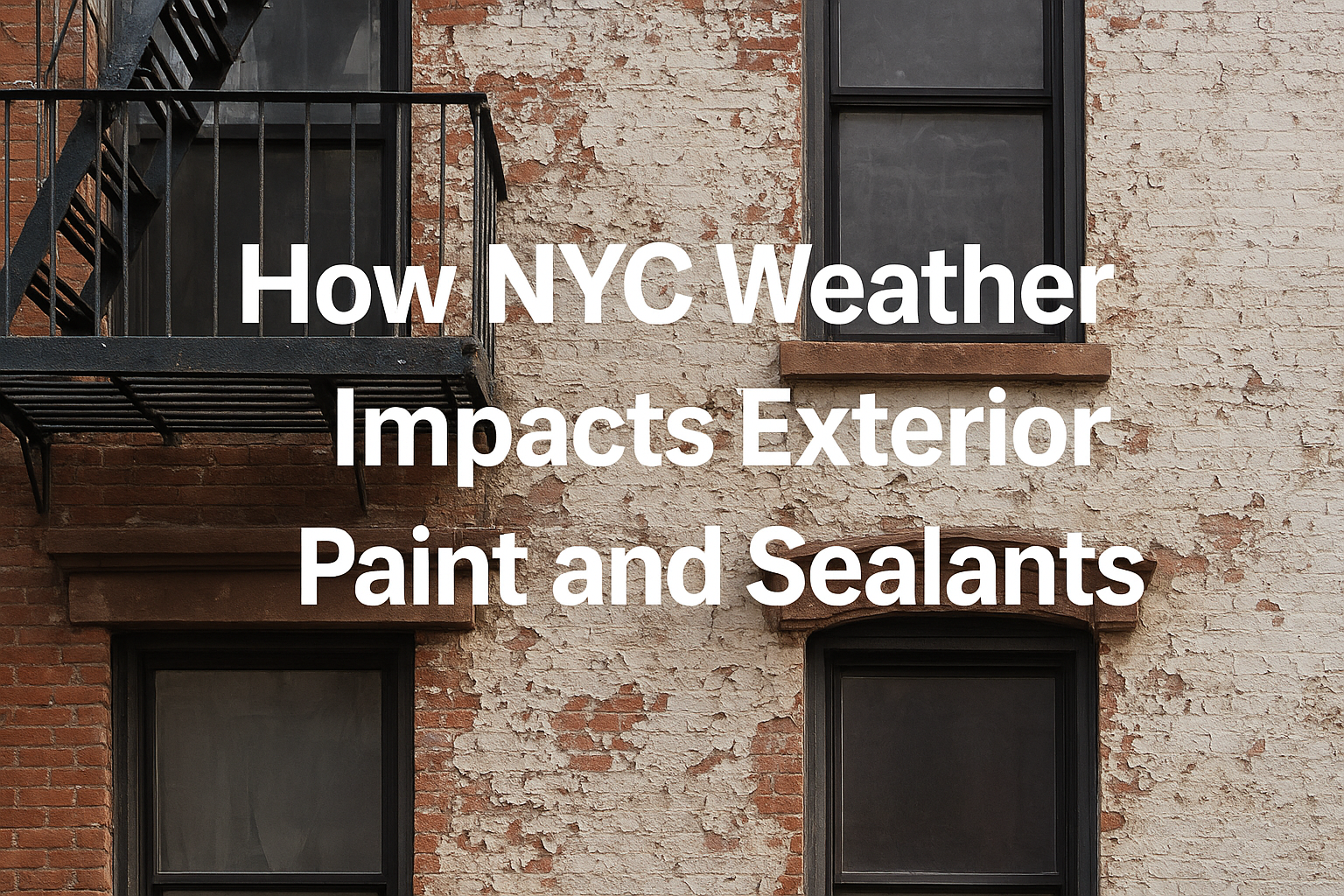
New York City’s weather puts exterior paint and sealants under constant pressure. Your building deals with freezing winters, humid summers, heavy rain, coastal salt, and sharp temperature swings. These conditions wear down coatings fast and weaken the protection they provide.
NYC’s dense environment adds more stress. Pollution, dust, traffic residue, and shade from tall buildings all affect how paint ages. These factors speed up fading, cracking, and peeling. You need the right products and seasonal upkeep to keep your property protected.
Temperature Fluctuations and Their Effect on Paint
NYC sees major temperature changes throughout the year. Materials like wood, brick, and concrete expand in heat and contract in cold. This movement stretches the paint film until it cracks or peels.
Even premium paint fails when surface prep is poor. Many brownstones and multifamily buildings develop tiny cracks from this thermal movement. Once those cracks appear, moisture enters and speeds up damage.
1) Humidity, Rain, and Moisture Penetration
NYC has high humidity in late spring and summer. Moist air slows paint drying and weakens adhesion. This leads to blistering, mold, soft spots, and uneven curing.
Heavy rainstorms make it worse. Older masonry absorbs water quickly. Without strong sealants, moisture gets trapped behind the paint and pushes it outward. A breathable, water repellent sealant helps stop water from entering while letting trapped moisture escape.
2) Winter Snow, Ice, and Freeze Thaw Cycles
Winter takes a serious toll. Snow and ice collect on ledges and window sills. During the day the snow melts, and at night it freezes again. This freeze thaw cycle pushes water deeper into small cracks.
Frozen water expands and forces paint or sealant apart. By spring, peeling and cracked caulking are common. Using elastomeric sealants protects these areas because they stay flexible in cold weather.
3) UV Exposure and Sun Damage
NYC still gets strong UV exposure despite its tall buildings. UV rays break down paint binders and cause fading, chalking, and surface weakening. South and west facing walls usually age the fastest.
Reflections from nearby glass buildings intensify the sun’s effect. UV resistant exterior paints, especially high quality acrylic coatings, hold up better in these areas.
4) Salt, Pollution, and Urban Contaminants
NYC’s coastal location means salt often reaches the air. This is common in neighborhoods near the water. Salt attracts moisture and speeds up paint deterioration.
Pollution also sticks to exterior surfaces every day. Traffic fumes, construction dust, and heating systems add residue that encourages mold and staining. Regular washing and mildew resistant paints help protect your building.
5) Wind Exposure and Abrasion
NYC streets channel strong winds throughout the year. These winds carry dust and grit that slowly wear down paint. Building corners and higher floors usually take the most impact.
Wind driven rain pushes moisture into cracks and seams that normally stay dry. This often causes earlier failure of sealants around windows and joints.
How to Protect Your NYC Exterior
You can extend the life of your exterior by choosing durable products and following a simple maintenance routine.
Use weather resistant paints designed for urban conditions. Choose elastomeric or polyurethane sealants that move with the building. Always prepare the surface by cleaning dirt, removing loose paint, and repairing cracks.
Plan seasonal care. Power wash facades to remove salt and pollution. Check caulking in spring and fall. Fix small issues early to avoid major repairs.
Conclusion
NYC weather is tough on exterior paint and sealants. When you understand how climate affects your building, you choose better products and maintain them the right way. This protects your property, keeps it looking sharp, and helps preserve long term value.