
In New York City, exterior design is never just about appearance. It is about resilience, efficiency, and intelligent use of space in environments that never slow down. From Brooklyn brownstones and Queens townhomes to mixed-use properties in Manhattan, exteriors in busy neighborhoods face constant pressure, foot traffic, noise, pollution, weather extremes, and limited square footage.
A successful exterior design in NYC must work harder than anywhere else. It must protect privacy without closing off light, create calm without isolating the home, and deliver durability without sacrificing character. Most importantly, it must age well under constant use.
This blog explores the best exterior design strategies for busy NYC neighborhoods, focusing on solutions that balance aesthetics, function, and long-term performance. These are not trend-driven ideas. They are proven approaches that thrive in dense urban conditions.
Why Exterior Design in NYC Requires a Different Mindset
Designing for suburban environments and designing for New York City are fundamentally different challenges. In busy neighborhoods, exteriors operate under constant exposure. People pass by at all hours. Vehicles vibrate the ground. Pollution settles on surfaces. Space is shared, compressed, and visible.
In this context, exterior design must prioritize durability, adaptability, and psychological comfort. A well-designed exterior should shield residents from the city’s intensity while remaining visually cohesive with its surroundings.
Homes that ignore these realities often look impressive at first but deteriorate quickly or fail to deliver comfort. The best exterior designs respond directly to the urban condition rather than resisting it.
Clean, Structured Design Performs Best in High-Traffic Areas
In busy NYC neighborhoods, clarity beats complexity. Overly intricate designs collect dirt, suffer damage, and require constant upkeep. Clean lines and structured layouts perform better visually and practically.
Simple geometry creates visual calm amid urban noise. It also allows materials to weather evenly, which helps the exterior age gracefully. This does not mean minimalism must feel cold. Texture, proportion, and material contrast add depth without visual clutter.
Structured design also improves maintenance. Flat planes, clear transitions, and defined edges are easier to clean, repair, and replace over time.
Durable Masonry Anchors Urban Exteriors
Masonry remains one of the strongest exterior design choices for NYC environments. Brick, stone, and concrete withstand pollution, moisture, and temperature swings better than many modern alternatives.
Brick facades absorb the rhythm of the city naturally. Stone adds permanence and visual authority. Concrete offers flexibility and modern expression while maintaining strength.
Well-detailed masonry does more than protect. It communicates stability and quality, which matters in neighborhoods where buildings sit shoulder to shoulder. Masonry also provides thermal mass, helping regulate interior temperatures and reduce noise intrusion.
When designed thoughtfully, masonry blends historical continuity with modern performance.
Layered Privacy Defines Successful Urban Exteriors
Privacy is essential in busy neighborhoods, but heavy barriers often feel defensive or unwelcoming. The best exterior designs use layered privacy rather than solid walls.
Low masonry walls, planters, railings, screens, and elevation changes work together to create separation without isolation. This approach allows light and air to pass through while limiting direct sightlines.
Layered privacy also enhances aesthetics. Instead of one dominant boundary, the exterior reads as a sequence of spaces, which adds visual interest and depth.
In NYC, where street life is constant, layered privacy transforms exteriors into buffers rather than barriers.
Outdoor Spaces Must Be Compact but Purposeful
In dense neighborhoods, outdoor space is limited, which makes design precision critical. The most successful exterior designs treat every square foot as intentional.
Instead of oversized patios or scattered features, compact spaces benefit from clearly defined zones. A seating area, a circulation path, and a planting edge may be all that fits, but when organized correctly, the space feels complete.
Built-in elements outperform movable ones in tight areas. Integrated seating, planters, and storage reduce clutter and maximize usability.
Purposeful design ensures outdoor spaces remain functional despite their size.
Noise-Reducing Design Improves Daily Experience
Noise defines life in busy NYC neighborhoods. Exterior design cannot eliminate it, but it can significantly reduce its impact.
Solid boundary elements, dense plantings, and textured surfaces help absorb and deflect sound. Masonry walls perform especially well when paired with greenery.
Designing for noise reduction also improves psychological comfort. Spaces that feel quieter encourage longer use, even when ambient city noise remains present.
Noise-aware exterior design transforms outdoor areas from transitional zones into true extensions of living space.
Low-Maintenance Materials Are Non-Negotiable
Busy neighborhoods demand materials that tolerate neglect without visible decline. Homeowners and property managers rarely have time for constant upkeep.
Porcelain pavers, sealed stone, pressure-treated or composite wood, and powder-coated metal outperform delicate finishes in NYC conditions. These materials resist staining, moisture, and wear while maintaining appearance.
Low-maintenance design does not sacrifice quality. It prioritizes materials engineered for urban realities rather than ideal conditions.
Choosing durable finishes reduces long-term costs and preserves visual integrity.
Lighting Shapes Safety and Identity After Dark
In NYC, exteriors remain active long after sunset. Lighting becomes both a safety feature and a design statement.
Well-designed lighting improves visibility without overwhelming the street. Subtle pathway lights, wall-mounted fixtures, and integrated step lighting guide movement and prevent accidents.
Lighting also defines identity. Warm, controlled illumination distinguishes private space from public surroundings. It creates a sense of arrival and comfort.
Exterior lighting should feel intentional and restrained, complementing architecture rather than competing with city brightness.
Greenery Softens Density Without Increasing Maintenance
Plants play a crucial role in busy neighborhoods, but uncontrolled landscaping quickly becomes a liability. The best exterior designs use greenery strategically.
Container planting, vertical gardens, and structured beds introduce nature without consuming valuable ground space. Hardy, pollution-tolerant plants thrive with minimal care.
Greenery softens hard edges, improves air quality, and provides visual relief from concrete surroundings. When integrated thoughtfully, it enhances both comfort and curb appeal.
Urban greenery works best when it is curated, not abundant.
Elevated Design Helps Navigate Urban Constraints
Elevation changes often occur naturally in NYC properties due to grading, basements, and stoops. Instead of hiding these conditions, strong exterior design uses them to their advantage.
Raised platforms define seating areas. Steps become architectural features. Level changes improve drainage and spatial clarity.
Elevation also reinforces privacy by lifting living spaces above street level. This separation improves comfort while maintaining openness.
Design that embraces elevation feels intentional rather than constrained.
Weather-Resilient Design Protects Long-Term Value
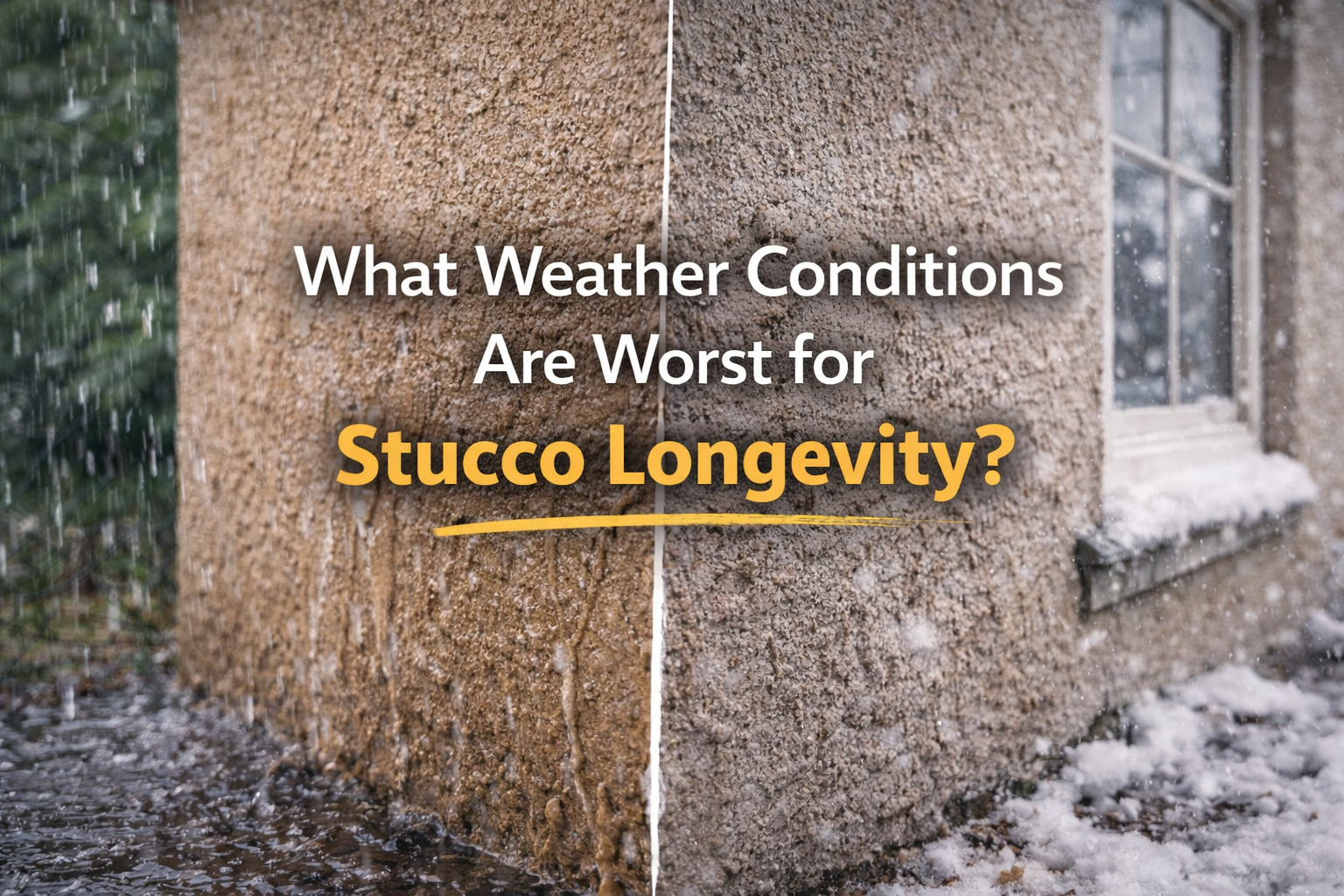
NYC weather challenges exteriors year-round. Freeze-thaw cycles, heavy rain, snow, and heat demand resilient design strategies.
Proper slope, drainage systems, and expansion allowances prevent cracking and shifting. Covered areas extend usability across seasons.
Weather-resilient design reduces maintenance and extends lifespan. It also preserves appearance, which matters in highly visible neighborhoods.
Ignoring climate realities results in premature deterioration and costly repairs.
Contextual Design Strengthens Neighborhood Character
The best exterior designs respect their surroundings. They do not mimic neighboring buildings, but they acknowledge scale, rhythm, and material language.
Contextual design helps buildings feel grounded rather than imposed. It improves neighborhood cohesion and often aligns better with zoning and landmark requirements.
In NYC, where architectural history varies block by block, sensitivity to context enhances both value and acceptance.
Design that belongs ages better than design that demands attention.
Security Can Be Elegant and Subtle
Security is a priority in busy neighborhoods, but aggressive solutions often harm aesthetics. The best exterior designs integrate security discreetly.
Lighting, sightlines, controlled access points, and durable materials provide protection without creating hostility. Design that feels secure also feels welcoming.
Subtle security measures encourage use rather than avoidance, which strengthens the relationship between residents and their surroundings.
Flexibility Prepares the Exterior for Future Needs
NYC properties evolve. Families grow, tenants change, and usage patterns shift. Exterior design must accommodate this reality.
Flexible layouts allow furniture rearrangement and future additions. Neutral material palettes accept updates without full redesign.
Designing with change in mind protects investment and reduces future disruption.
Quality Installation Determines Urban Performance
Even the best designs fail without proper execution. In NYC, installation quality matters even more due to access challenges and structural complexity.
Experienced professionals understand load requirements, drainage constraints, and code compliance. Proper base preparation and detailing prevent failure under constant use.
Quality installation transforms design intent into long-term performance.
Conclusion
The best exterior designs for busy NYC neighborhoods succeed because they understand the city rather than fight it. They prioritize durability over decoration, clarity over complexity, and comfort over trend.
By focusing on structured design, resilient materials, layered privacy, purposeful outdoor spaces, and long-term adaptability, homeowners create exteriors that thrive under constant exposure.
In a city that never slows down, the most successful exteriors offer stability, calm, and lasting value. They do not just exist within the neighborhood, they actively improve daily life within it.