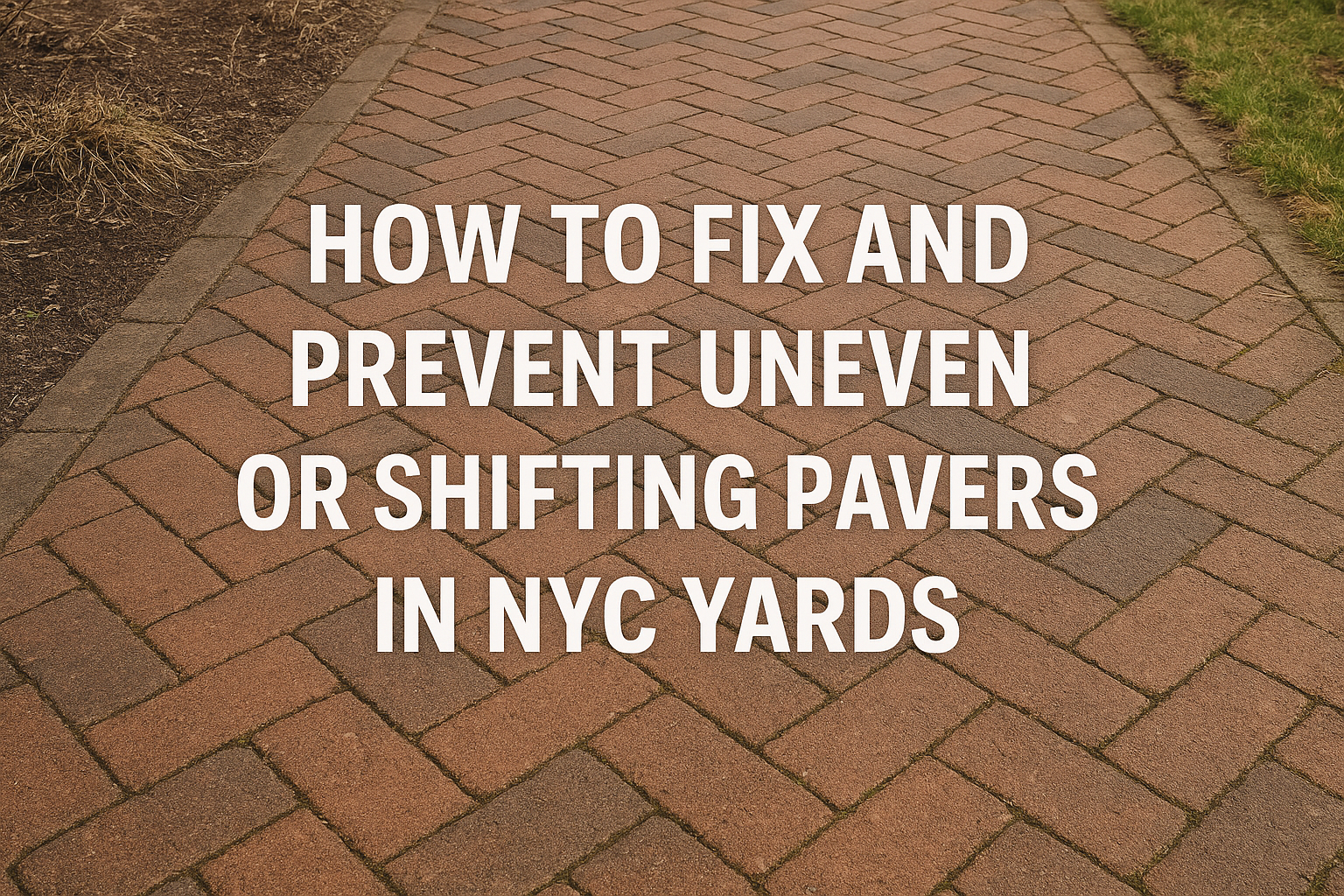
In New York City, outdoor spaces are valuable extensions of living areas, whether it’s a small patio, a garden walkway, or a spacious courtyard. But with NYC’s unpredictable weather, heavy foot traffic, and complex soil conditions, it’s common for pavers to shift, sink, or become uneven over time. Not only does this affect the beauty of your yard, but it can also create safety hazards and drainage problems.
The good news is that most paver issues are completely fixable, and preventable, with the right installation and maintenance practices. This guide covers how to identify the causes of uneven pavers, repair them effectively, and keep your NYC yard level and attractive for years to come.
Steps to Fix Uneven or Shifting Pavers
Even with professional installation, outdoor pavers can move due to environmental and structural factors. New York’s climate is particularly harsh on hardscapes because of freeze-thaw cycles, heavy rain, and compacted urban soil.
Here are the most common reasons your pavers may become uneven:
- Poor base preparation, where the foundation wasn’t compacted or leveled properly.
- Erosion caused by heavy rain or poor drainage.
- Tree roots growing underneath and lifting sections of the patio or walkway.
- Freeze-thaw cycles, which cause soil to expand and contract.
- Washed-out joint sand that loosens the paver structure over time.
Understanding what caused the movement is the first step toward finding a long-lasting fix.
1. Identify the Affected Area
Start by marking the uneven section. If the sinking or shifting covers a small area, you can usually repair it yourself. However, if large sections are affected, it may indicate a base issue that requires professional regrading or drainage correction.
2. Remove the Uneven Pavers
Carefully lift the affected pavers using a flat pry bar or similar tool. Be gentle to avoid chipping the edges, especially with older or natural stone pavers. Set them aside in order so you can reinstall them in the same pattern later.
3. Level the Base Layer
Once the pavers are removed, inspect the base layer, usually a mix of crushed stone and sand. If it looks uneven, compact it again using a hand tamper or plate compactor. Add fresh paver base material if needed and ensure proper slope for drainage, typically a quarter inch per foot away from structures.
This step is crucial for long-term stability. A poorly compacted base is the most common reason pavers shift again after repair.
4. Reinstall the Pavers
Place the pavers back in their original pattern, ensuring they sit evenly with the surrounding surface. Use a rubber mallet to gently tap each paver into position. Once the area is level, sweep polymeric sand into the joints to lock everything securely in place.
Lightly mist the area with water to activate the sand’s binding agents, which help prevent movement and weed growth.
5. Address Drainage and Edging Issues
Uneven or shifting pavers often signal a drainage problem. If you notice water pooling nearby, consider adding a drain channel or permeable base system to help manage runoff.
Additionally, check your edge restraints, the borders that keep pavers in place. Loose or damaged edging can allow lateral movement over time. Replace or reinforce these edges to maintain structure and alignment.
Conclusion
Uneven or shifting pavers can make your outdoor space look neglected, but with proper repair and maintenance, you can restore a smooth, polished finish in no time. Most issues come down to drainage or foundation concerns, both of which are manageable with consistent care.
By following these steps and addressing the root causes early, you can prevent unevenness, enhance your yard’s safety, and maintain the crisp, elegant look of your NYC pavers for years to come.