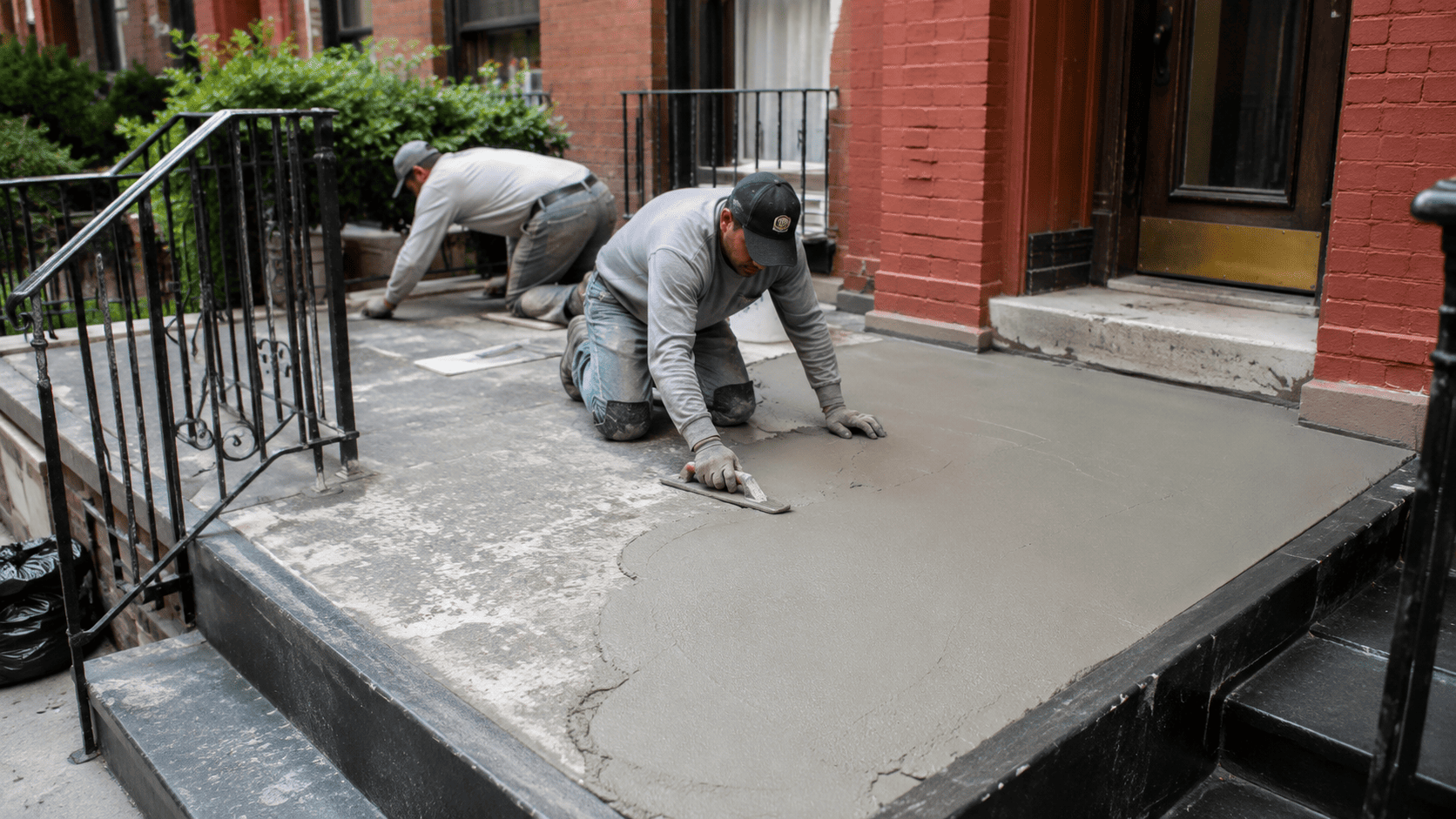
One of those options to consider but often overlooked is concrete resurfacing. One option to consider, but that homeowners often overlook, is concrete resurfacing. Under the right circumstances, resurfacing can be wiser than replacement. However, it does not pay off in every situation.
So what is concrete resurfacing, what are the costs of concrete resurfacing in NYC, and when is it really a good idea?
What Concrete Resurfacing Is
Overlaying, also called resurfacing, means applying a thin layer of new polymer-modified or concrete material over an existing concrete slab. The overlay bonds to the existing surface, hides surface damage, restores a smooth or textured finish, and extends the usable life of the slab without full replacement.
The thickness of the overlay is usually 1/4 to 1/2 inch. For decorative use, some systems may be slightly thicker. It is not a structural repair. Resurfacing deals with a slab’s surface condition. It cannot correct a damaged foundation, structural cracks, or major movement.
When Resurfacing Is Appropriate in NYC
One of the most promising types of concrete for resurfacing is surface spalling and pitting, which can come from salt, freeze-thaw cycles, or aging. The slab remains structurally sound, but the surface has deteriorated visually or texturally.
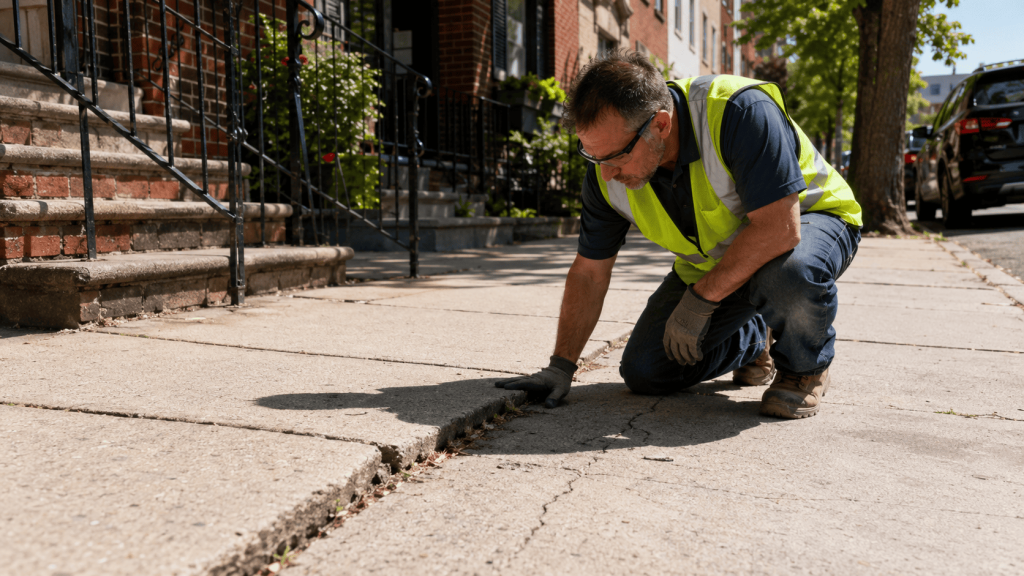
Surface cracking with no displacement may also qualify. These include hairline to fine cracks with no major vertical movement between sides. A contractor can cover them and resurface the area, but the cracks may show through over time, especially in NYC’s freeze-thaw climate. More to follow shortly.
Resurfacing can also upgrade a sound slab cosmetically. A structurally sound driveway, patio, or garage may only look old. Resurfacing can give it a clean look at a much lower cost than replacement.
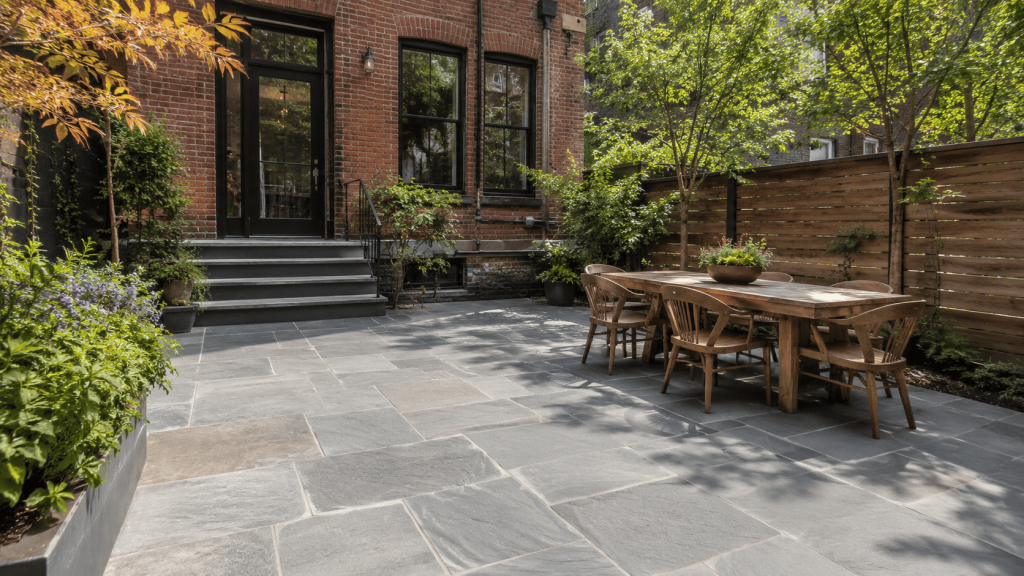
Stone pattern, slate texture, or exposed aggregate finish: A plain grey slab can become a decorative finish through overlays for stamping or texturing. This usually costs far less than pouring a new decorative slab.
When Resurfacing Does Not Make Sense
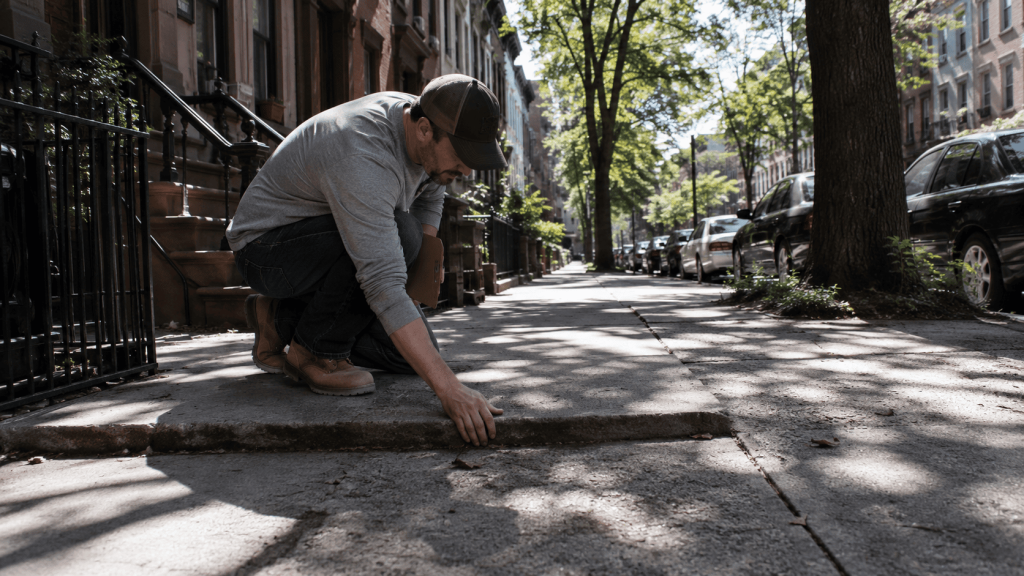
Structural cracks with displacement. When one side of a crack sits higher than the other, or when the crack is more than 1/4 inch wide and moves seasonally, sealing the crack with paint gives only a temporary solution. The crack keeps extending below the overlay and later shows through the surface, sometimes in the first winter.
Heaving or sinking sections. The slab has a base issue. Resurfacing works on the surface. The base failure continues, and the overlay fails too.
Widespread delamination. If the existing concrete surface flakes away from the slab on a large scale, the overlay will not bond well to the existing slab. Resurfacing needs a strong substrate to attach to.
In some cases, NYC properties may already have several resurfaced slabs, especially very old slabs with existing overlay layers. Each added layer can make bond quality and thickness variation worse.
Real Costs for Concrete Resurfacing in NYC
Standard Resurfacing – Plain or Broom Finish
Per square foot: $3 to $7
300 sq ft patio: $900 to $2,100
400 sq ft driveway: $1,200 to $2,800
Decorative Overlay or Stamped Overlay
Per square foot: $6 to $14
300 sq ft patio with stamped finish: $1,800 to $4,200
400 sq ft driveway with decorative finish: $2,400 to $5,600
Microtopping or Thin-Finish Systems
Per square foot: $3 to $8
Common for NYC brownstones and row homes in basements and garages.
Compared to Full Replacement
These are compared to full replacement:
300 sq ft patio replacement: $1,800 to $3,600
400 sq ft driveway replacement: $3,200 to $5,800
Although resurfacing has a cost advantage, the savings are not always as large as homeowners expect. This is especially true when the area is small and mobilization and preparation costs are similar for both options.
The NYC Climate Factor
This is especially important because resurfacing performs differently here than in milder climates.
Overlay materials need to bond permanently to the existing slab surface. NYC freeze-thaw cycles place repeated stress on that bond. The existing slab and the overlay layer also expand and contract at slightly different rates. That movement adds more stress at the bond line.
A good polymer-modified overlay system over a well-prepared surface will perform better during NYC winters than basic cement-based products. If a contractor offers a simple cement mix as an overlay in New York, ask more questions.
Good surface preparation matters even more in this climate. The contractor should clean the existing slab completely, remove loose material, and mechanically profile the surface for proper bond strength.
If a contractor skips preparation and pours overlay onto a dirty or dusty surface, the product may delaminate within a season or two.
The First Step Is to Prepare – And This Is the Step That Counts!
Poor surface preparation causes most resurfacing failures in NYC. The resurfacing material is usually not the main problem.
Proper preparation includes pressure washing or mechanical grinding to remove all surface contaminants. The contractor should fill existing cracks with a suitable crack filler before applying the overlay. They should also use a bonding primer based on the overlay system.
Temperature control matters too. Contractors should not place overlays below 50°F or when rain is expected within 24 hours.
The overlay will only perform as well as the surface underneath it. If your contractor rushes this step, the finished product will not last as long.
Why Gushi Construction for Concrete Resurfacing in NYC
Since 1993, Gushi Construction has repaired, resurfaced, and replaced concrete throughout Brooklyn and all five NYC boroughs. The team clearly decides whether a slab should be resurfaced or replaced before any work begins, and explains the recommendation in writing.